Nervous system regulation: the evidence
What a 223-study meta-analysis supports, whether dysregulation is really just anxiety, and which treatments have actually been tested.
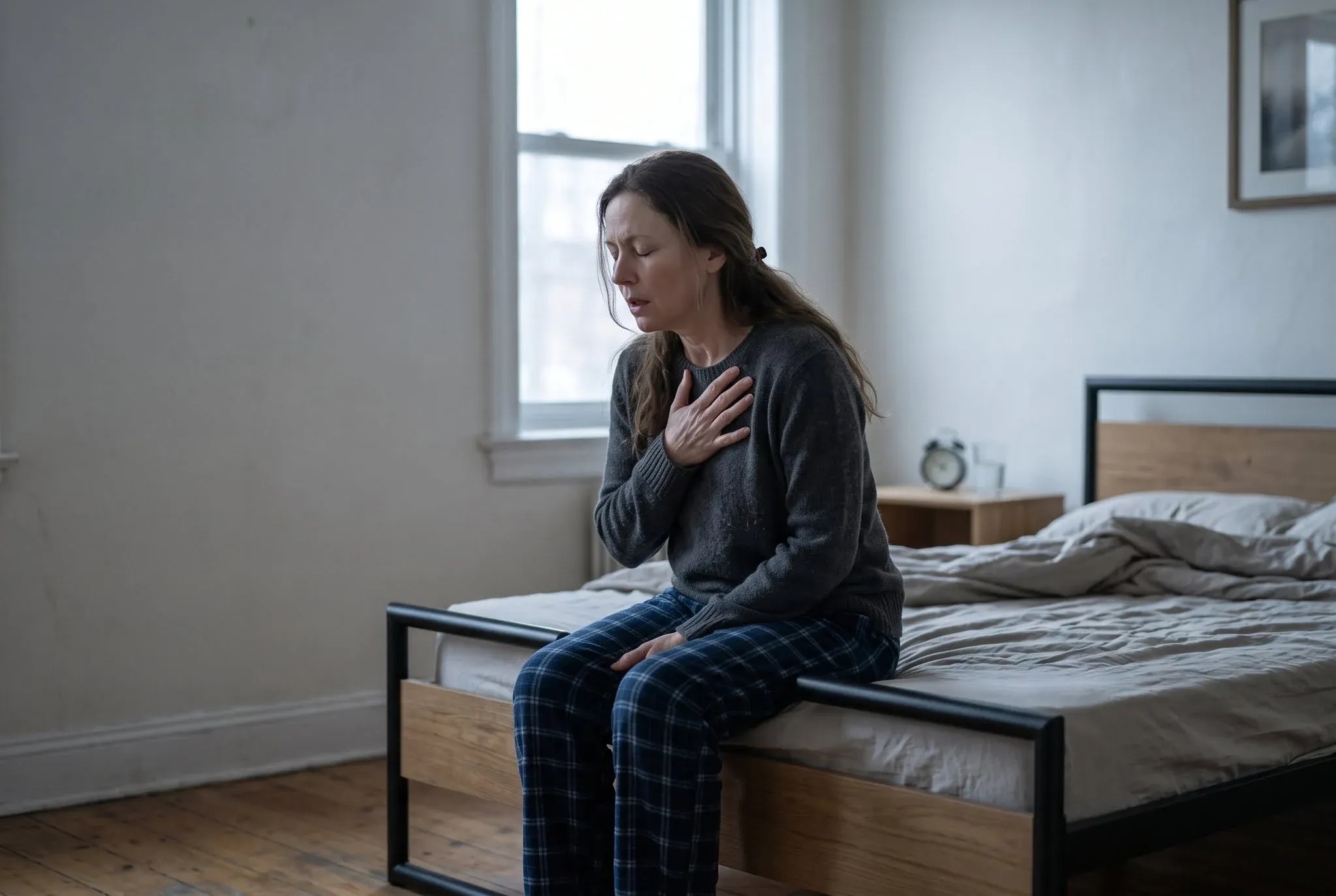
Nervous system regulation is the practice of deliberately shifting your body out of a threat state and back toward calm.
The phrase is everywhere at the moment, attached to breathing apps, cold plunges, supplements and a great deal of confident explanation.
Some of it has genuinely good evidence behind it. Some of it is packaging. Knowing which is which saves you time, money, and the particular discouragement of trying something that was never going to work.
What is nervous system regulation?
Underneath the phrase is real physiology. Your autonomic nervous system runs the things you do not consciously control, and it shifts between mobilising you for threat and settling you for rest and digestion.
After sustained stress, that system can get stuck toward the mobilised end. You stay alert when nothing is happening, or you flatten out and feel nothing much at all.
“Regulation” describes deliberately influencing that balance. The term itself is wellness-industry language rather than a clinical one, but the underlying process is measurable.
The usual measure is heart rate variability, or HRV. That is the variation in time between heartbeats, and higher variability generally indicates more parasympathetic, or calming, influence on the heart.
How do you tell if your nervous system is dysregulated?
There is no test you can take, and the online quizzes have nothing behind them. What people describe is a cluster.
- Startling easily, or feeling on alert without a reason you can name.
- Sleep that does not restore you, particularly waking at the same time each night.
- Digestive problems that arrive and leave with stress.
- Flattening out. Numbness, distance, watching your life rather than being in it.
- Swinging between the two, wired one day and unable to get off the sofa the next.
- Disproportionate reactions to small things, followed by exhaustion.
- Difficulty settling even when the situation is objectively safe.
Be careful with this list. Every one of those symptoms has other possible causes, several of them medical. Thyroid problems, anaemia, sleep apnoea and perimenopause all produce overlapping pictures.
If this is new or severe, see a doctor before concluding it is your nervous system. That is not a formality. It is the step that catches the thing a breathing exercise will not fix.
Is nervous system dysregulation a real thing?
Worth asking directly, because the phrase went from clinical shorthand to everywhere in about two years, and a lot of people are now selling treatment for it.
The underlying physiology is real and measurable. Autonomic balance shifts under chronic stress, HRV tracks it, and the changes show up in people with trauma histories.
“Nervous system dysregulation” as a named condition is not. It appears in neither the DSM-5 nor the ICD-11. No clinician can diagnose you with it, and there is no agreed threshold at which someone becomes dysregulated.
That gap is where the selling happens. A phrase that sounds diagnostic, describing something real, with no definition firm enough to say you do not have it.
The practical position is straightforward. Use it as a description of how you feel, which is legitimate and useful. Do not treat it as a diagnosis, and be wary of anyone charging you to fix a condition that has no criteria.
Is it dysregulation or anxiety?
Asked constantly, and the framing behind the question is worth taking apart, because a lot of content sells one as the sophisticated alternative to the other.
The implied split is that anxiety is a mental health problem and dysregulation is a body problem. That split does not survive the evidence.
A meta-analysis of 36 studies compared resting heart rate variability in 2,086 people with an anxiety disorder against 2,294 controls.
Anxiety disorders were characterised by lower HRV, on both high-frequency and time-domain measures. The differences were statistically robust.
Read what that means. Anxiety disorders already have a measurable autonomic signature. The clinical category and the physiological state are not two competing explanations of your experience. They are the same territory described at different levels.
So the honest answer to “is it dysregulation or anxiety” is usually that the question is malformed. If your body is stuck in a threat state and it is interfering with your life, the physiology is real either way.
Only one of those two descriptions comes with treatments that have been tested.
One practical difference is worth keeping. “Anxiety disorder” is a diagnosis you can be assessed for, which opens doors to treatment and, in some countries, to accommodations and cover. “Dysregulation” opens none of them.
Choosing the wellness word over the clinical one can feel less pathologising. It also removes the route to help.
What does the evidence actually support?
Slow breathing. That is the honest headline, and the evidence for it is better than most people realise.
A 2022 systematic review and meta-analysis in Neuroscience and Biobehavioral Reviews examined voluntary slow breathing and heart rate variability.
The authors screened 1,842 abstracts and included 223 studies. They noted at the outset that no comprehensive quantitative review had previously existed to support or refute the claim.
Their results showed increases in vagally-mediated HRV during the breathing itself, immediately after a single session, and after a multi-session intervention.
That last point is the important one. The effect was not only present while breathing slowly. It persisted after single sessions and after sustained practice.
An earlier 2018 systematic review in Frontiers in Human Neuroscience looked at the mechanism, focusing on techniques under ten breaths per minute.
It found slow breathing increased HRV and respiratory sinus arrhythmia, alongside changes in brain activity, with EEG showing increased alpha and decreased theta power.
Worth noting for calibration: that review found only 15 eligible studies out of 2,461 abstracts screened. The mechanism work is much thinner than the outcome work.
So the practical summary is narrow but solid. Breathing slowly, under about ten breaths a minute, reliably shifts a measurable marker of parasympathetic activity, and the effect outlasts the session.
Where polyvagal theory fits
Almost every article on this subject explains the mechanism using polyvagal theory. It is worth knowing what that is and how firm it is.
Polyvagal theory, proposed by Stephen Porges, describes the autonomic nervous system as having several branches rather than a simple on-off between stress and calm.
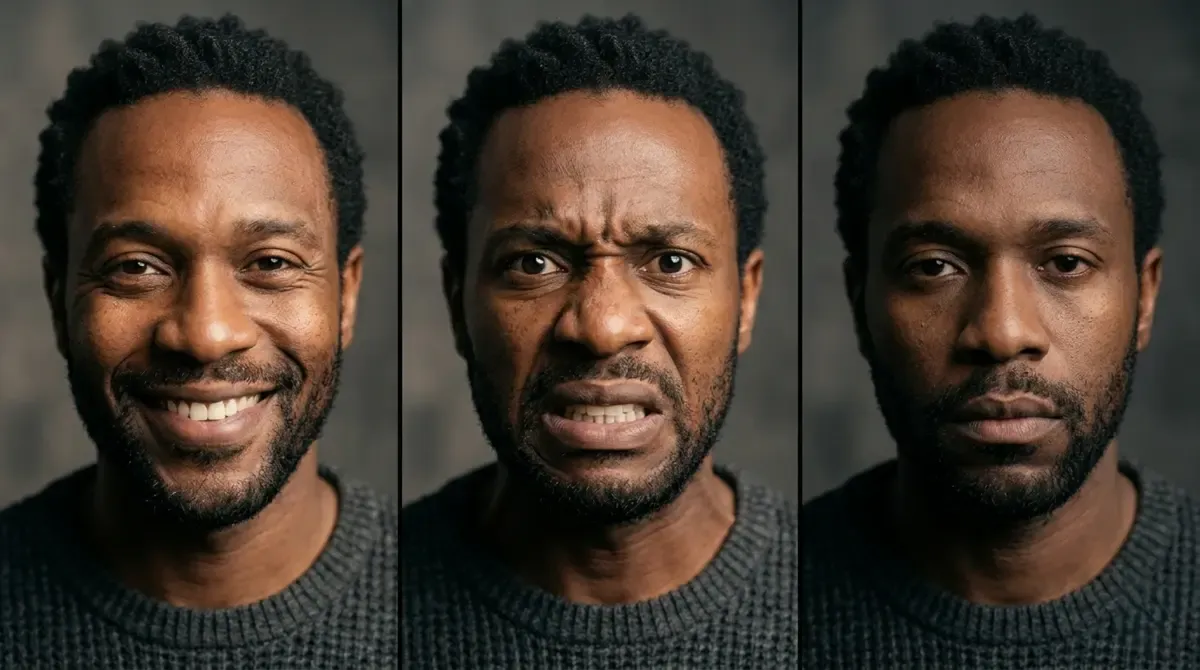
In that account there is a social engagement branch supporting connection and calm, a mobilising branch for fight or flight, and a shutdown branch producing collapse and numbness.
It is a genuinely useful description, and it matches what people report. Many survivors recognise all three states immediately.
It is also a theory, and as of 2026 a rejected one. Thirty-nine specialists in vagal physiology and vertebrate evolution were invited to evaluate it, and all but one accepted. They concluded that it is untenable.
Their finding was that its central claims about the vagus nerve, the brainstem nuclei and vagal evolution are not supported by the evidence. Many of those experts had previously been cited in the polyvagal literature as supporting it.
That distinction matters more than it sounds. The breathing evidence stands on its own regardless of which explanatory model turns out to be right.
How do you calm your nervous system?
Ordered by how much support each has, rather than by how good each sounds.
Slow breathing, with a longer exhale. The best-supported thing on this list. Aim for around six breaths a minute, for example in for four and out for six. Five to ten minutes.
Regular practice rather than rescue attempts. The meta-analysis found effects after multi-session interventions, which suggests this behaves more like training than like a fire extinguisher.
Movement. Walking, and anything rhythmic. Well supported for stress and mood generally, even where the nervous-system framing is loose.
Sleep, food and daylight. Unglamorous and consistently underrated. Dysregulation is much harder to shift on four hours of sleep.
Co-regulation, covered below.
Cold exposure, humming, singing, gargling. These are commonly recommended for vagal stimulation. The evidence is thin and mostly small studies. Harmless to try, but hold the claims loosely.
Supplements marketed for the vagus nerve. No good evidence. Skip.
What is co-regulation?
Calming through contact with another regulated person, rather than doing it alone.

It is the mechanism behind a hand on your back settling you faster than any technique. Infants regulate entirely this way, and adults never fully stop.
This is the part most often missing after an abusive relationship, and its absence explains a lot. The person who was supposed to be your source of calm was the source of the threat.
That leaves people trying to self-regulate their way out of something that is partly a connection problem. Technique alone is doing the work of two systems.
Which is a reason to prioritise safe company over a better breathing protocol, and a reason the isolation that follows these relationships costs so much.
Why this matters after abuse
Because the symptoms get misread as personality, by other people and by you.

Years of unpredictable threat trains a system to stay ready. Afterwards the readiness remains, and it looks like anxiety, or being difficult, or overreacting.
The specific cruelty is that the readiness was accurate. Scanning a room was the correct response to the room you were in, and the skill does not switch off when the room changes.
It also explains why insight stalls. You can understand exactly what happened and still flinch at a raised voice, because the flinch is not produced by the part of you that understands.
The fawn response is the clearest example. Appeasement runs faster than deliberation, which is why knowing about it changes so little on its own.
This is also why trauma bonding survives the facts. The attachment was built through a nervous system, not through an argument, and it does not respond to being out-reasoned.
Does therapy work if the problem is in the body?

There is a claim circulating that you cannot think your way out of a body problem, and that talking therapy therefore fails where the nervous system is involved.
It is a good line and the evidence does not support it.
A meta-analysis of 41 randomised placebo-controlled trials covering 2,843 patients tested cognitive behavioural therapy against placebo across anxiety and related disorders.
CBT produced moderate effects on target symptoms, and the response rate against placebo carried an odds ratio of 2.97. Effects were large for OCD, generalised anxiety disorder and acute stress disorder.
The same analysis is honest about where it is weaker. Effects were small to moderate for PTSD, social anxiety and panic disorder, and the authors state plainly that better treatments are needed for those three.
That is a more useful picture than either the marketing or the backlash. Talking therapy works for some of this, works less well for the trauma end, and has actually been measured.
On medication, be careful what you read. You will find content arguing that antidepressants make nervous system problems worse.
A network meta-analysis in the Lancet compared drug treatments for generalised anxiety disorder precisely because clinicians needed comparative evidence to choose between them.
There is a real evidence base here, and decisions about it belong with a prescriber who knows your history. Nothing on this page, or any page like it, is a reason to stop taking something you were prescribed.
The reasonable position is that breathing practice, therapy and medication are not competitors. People who get better usually use more than one.
What does not have good evidence
Being direct here saves people money.
- HRV wearables as therapy. Fine as a measurement. They do not treat anything.
- Vagus nerve supplements. No.
- Most “somatic” courses promising nervous system rewiring in a fixed number of days. The timeline is marketing.
- Nervous system quizzes. Unvalidated.
- Any single technique presented as the answer. The evidence supports regular practice, not a specific trick.
- Claims that trauma is stored in specific body parts. Popular, and not established.
None of that means the practices are worthless. It means the confident mechanism stories around them are running well ahead of what has been shown.
Common questions
How long does it take? The meta-analysis found effects both immediately and after multi-session practice. Expect small changes quickly and meaningful ones over weeks.
Is nervous system dysregulation a diagnosis? No. It is a descriptive phrase, not a clinical category, which is worth knowing before paying for a programme that treats it as one.
Can I do this without a therapist? The breathing practices, yes. Where the dysregulation follows serious trauma, doing it alongside a trauma-informed professional works considerably better.
Why do I feel worse when I try to relax? Common, and it has a name in clinical writing: relaxation-induced anxiety. Slowing down removes distraction and can make internal signals louder. Shorter sessions and open eyes often help.
Is breathwork the same as slow breathing? No. The evidence above is for slow, gentle breathing. Intense hyperventilation-based practices are a different thing and are not covered by it.
Does polyvagal theory being contested mean the practices do not work? No. The breathing evidence does not depend on that theory being correct.
Is nervous system dysregulation just anxiety with a nicer name? Partly. Anxiety disorders show measurably lower HRV, so the physiology is not a separate thing. The difference is that one of the two words gets you assessed and treated.
Should I stop my medication and regulate instead? No, and please do not decide that from a website. That is a conversation with whoever prescribed it.
Does CBT work for this? Better than the backlash suggests and not uniformly. Large effects for generalised anxiety and OCD, smaller ones for PTSD, panic and social anxiety.
What to take from this
The honest position is narrower than the marketing and more useful than the cynicism.
Slow breathing has a meta-analysis of 223 studies behind it and measurably shifts parasympathetic activity, including after the session ends. That is a real finding and a genuinely cheap intervention.
The explanatory framework wrapped around it is less settled, and much of the surrounding industry is selling certainty it does not have.
Practise the thing with evidence, keep company that settles you, and treat confident mechanism claims with some suspicion. That is most of it.
Where to go next. The fawn response covers the specific pattern this most often shows up as after abuse.
Trauma bonding explains why the attachment outlasts the understanding, and boundaries with a narcissist covers the practical side.
If you want structured support, the 8 week narcissistic abuse recovery program works with this directly.
Coaching is not therapy and is not a substitute for medical or psychiatric care. If you are in crisis, please use the support resources on this site or contact your local emergency services.