Types of Narcissists: What Research Says
Every article gives a different number of narcissist types. Here is where the numbers come from, what the research actually supports, and what it means for you.
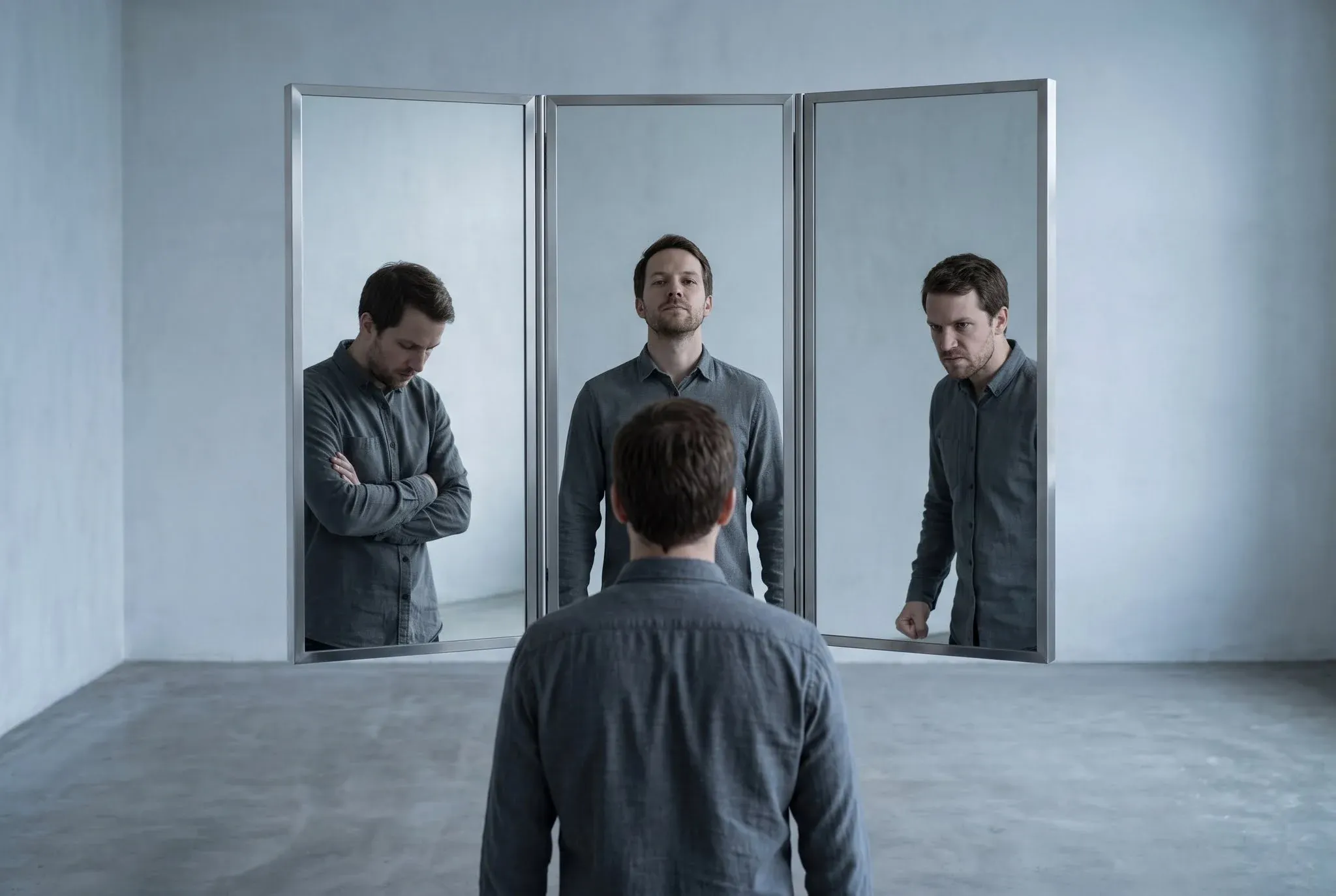
Search this and you will be told there are five types. Or six, or seven, or eight, or ten.
Every one of those articles is confident. None of them agrees with the next one.
That disagreement is the most useful thing on the page, because it tells you the numbers are not coming from research. They are coming from whoever wrote the article.
How many types of narcissists are there?
There is no agreed number, and the honest answer is that the question is slightly wrong.
Look at what currently ranks for this search. One clinic says eight. A major mental health publisher says five. Another site says seven. A therapy practice says six. The related searches offer ten.
These are not competing findings, because nobody is counting anything. Each writer picked a set of descriptive labels and put a number on the front. A number makes a better headline than “it is a dimension”.
Research does divide narcissism up. It divides it far more conservatively than any of these lists, and it divides it into levels of a hierarchy rather than kinds of person.
What does the research actually support?
A preregistered meta-analysis of 118 studies states the structure plainly. Narcissism is a hierarchical construct that can be studied at one, two, or three factor levels.
One, two, or three. Not eight.
At the two-factor level you get grandiose and vulnerable, which is the division with the broadest support. A 2020 paper describes broad consensus that at least these two dimensions exist.
At the three-factor level the split is agentic extraversion, interpersonal antagonism, and narcissistic neuroticism. That is the trifurcated model, and it is where the interesting findings live.
Everything else you have read about, somatic, cerebral, communal, benign, neglectful, entitled, is a description of what a person is grandiose about. It is not a separate diagnostic category.
Which part actually predicts harm?
This is where the popular lists mislead most, and where the meta-analysis is genuinely surprising.
Across those 118 studies, the three factors did not behave the same way at all.
Interpersonal antagonism was positively associated with every index of aggression tested. That is the entitled, exploitative, contemptuous component.
Narcissistic neuroticism was positively associated with general and reactive aggression. Vulnerable narcissism overall associated strongly with reactive aggression.
Agentic extraversion was negatively associated with all indices of aggression. The confident, charming, spotlight-seeking part predicted less aggression, not more.
Read that again, because it inverts the standard advice. The showy grandiosity everyone is taught to watch for is not the dangerous ingredient.
Antagonism is the dangerous ingredient. Someone can be quiet, self-effacing and deeply antagonistic, and that combination is worse for you than a loud person who is not.
The 2020 paper points the same way. Neurotic and antagonistic aspects were the most clinically relevant, while grandiose narcissism was not correlated with most forms of psychopathology, and was positively associated with life satisfaction.
Are these types fixed?
No, and this may be the single most practical finding available on this topic.
A 2024 study of daily narcissistic states found that grandiose and vulnerable states fluctuate within the same person over days.
The same individual moves between presentations. The grandiose display and the wounded collapse are not two kinds of people, they are two states one person occupies at different times.
That explains something survivors describe constantly and rarely see confirmed. The person who was arrogant on Tuesday and fragile on Thursday was not putting on an act on one of those days.
It also explains why typing them never quite works. You settle on “covert”, and then a grandiose week arrives and you conclude you were wrong about everything.
The types you will meet, and what they actually are
Useful as descriptions. Just do not mistake them for categories.
Grandiose or overt. Loud, entitled, openly self-important. The prototype, and per the research the one least associated with psychopathology.
Vulnerable or covert. Quiet, resentful, chronically wounded, self-important in private. Associated with the poorer clinical picture of the two, which the covert narcissist covers in full.
Somatic. Grandiose about the body: appearance, fitness, sexual conquest. The most searched of these labels, and it has its own section below. Where the entitlement extends to sex specifically, sexual narcissism is the one term here with a validated scale behind it.
Cerebral. Grandiose about intellect. Same structure, different topic.
Communal. Grandiose about being good: the most caring, the most generous, the most self-sacrificing person in the room. This one has a real measure behind it, and communal narcissism covers why.
Malignant. Narcissism combined with antagonism, paranoia and sadism. This is the one where the label carries real weight, because it names a combination rather than a topic, and malignant narcissism covers it.
Notice the pattern. Somatic, cerebral and communal answer “grandiose about what”. Malignant answers “combined with what”. Only the second kind changes the risk.
What is a somatic narcissist?

The most searched of the invented labels, so it earns a proper answer rather than a line.
The description people mean is consistent: someone whose self-worth runs through the body. Appearance, fitness, grooming, and sexual conquest as the evidence of being superior.
That describes real people. The label attached to it has a history worth knowing.
“Somatic narcissist” is not a research term. Search the peer-reviewed literature for it and you get papers about somatization, which is an unrelated subject concerning physical symptoms with psychological origins.
The somatic and cerebral pairing was popularised largely through the self-published work of Sam Vaknin, whose material still dominates page one for this search. He is an author on the subject rather than a clinician or researcher.
So this is not a diagnosis, a validated scale, or a category anyone is measured against. It is a useful shorthand with no measurement behind it.
What the research does show
There is real evidence about the underlying behaviour, and it is more precise than the label.
A meta-analysis of narcissistic self-enhancement pooled 171 correlations from 36 studies covering 6,423 people. It only counted studies comparing self-reports against observer reports or objective measures.
Narcissists rated themselves more highly than others rated them, and the effect was concentrated in agentic characteristics rather than communal ones. Agentic self-enhancement came out at .29, communal at .05, which was not distinguishable from zero.
Attractiveness was one of the ten specific characteristics the authors examined.
Read what that means for the somatic idea. The gap is not in how good they look. It is between how good they think they look and how they are actually seen.
That is why the confidence can seem disproportionate, and why criticism of appearance lands so much harder than it reasonably should.
Signs people describe
- Time and money go to the body. Training, diet, grooming, clothes, and procedures, at a scale that displaces other things.
- Appearance is a topic. Theirs, and yours, and other people’s, constantly.
- Comments about your body. Framed as helpful, delivered as correction.
- Fishing for compliments about their looks, and visible irritation when none arrive.
- You are treated as an accessory. How you look reflects on them, so what you wear becomes their business.
- Sexual conquest as scorekeeping, with attention from others treated as evidence of worth.
- Disproportionate rage at appearance criticism. The one topic where a mild remark produces a serious reaction.
Somatic or cerebral?
Google asks this directly, and the answer is short.
Cerebral is the same structure with intellect as the subject. Superiority is demonstrated through being the cleverest, best-read or most knowledgeable person present.
Neither is a type of person. Both describe the domain the grandiosity attaches to, and people move between domains as circumstances change.
Somebody whose looks stop earning admiration may shift to expertise. That is one reason the presentation often changes with age, though nothing here should be taken as a prediction about a specific person.
What to do about it
The same as for any presentation, because the domain does not change the tactics.
Do not argue about appearance. It is the topic with the least available reason and the most available rage.
Do not compete on it. Matching them on grooming or attention hands them the terms.
Watch the treatment, not the surface. Contempt, entitlement and exploitation are what predict harm, and they are visible independently of how anyone looks.
Does the type change what you should do?

Barely, and this is the part worth taking away.
The advice does not fork by type. Boundaries, grey rock, documentation and a plan are the same regardless of whether the person is loud or quiet.
What changes is what you should expect. A grandiose presentation escalates openly, so the harm is visible and others may witness it.
A vulnerable presentation escalates through withdrawal, guilt and reputation. The harm is deniable, and you will struggle to describe it to anyone who has not seen it.
That difference is about evidence and support, not about tactics. It affects how believed you will be, which is the practical problem in a smear campaign.
The one distinction that genuinely matters is antagonism. Contempt, exploitation and enjoying your distress raise the risk regardless of the packaging.
Is my ex a narcissist?
The question underneath all of this, and typing them will not answer it.
Diagnosis is rarer than the internet suggests. A systematic review of community studies put narcissistic personality disorder at an average of 1.06% of adults.
You are not going to get a diagnosis, and you do not need one. What happened to you is describable without it.
Better questions: did it repeat, did repair ever happen, and did they treat your distress as information or as an opportunity.
The signs of a narcissist covers what to look for in behaviour, and why the most harmful traits are the ones that look best at first.
Common questions
What is the most dangerous type? Malignant, because it combines narcissism with antagonism and sadism. More generally, antagonism is the component that predicts harm.
What are the 7 types of narcissism? There is no validated list of seven. The number varies by article because the lists are editorial, not empirical.
Can someone be more than one type? Yes, and most are. Presentations also shift within the same person across days.
Is somatic narcissism a real diagnosis? No. It is a popular shorthand for grandiosity focused on the body, and it has no validated measure or place in the research taxonomy.
Is covert worse than overt? Worse for your credibility, because the harm is less visible. The vulnerable dimension also carries the poorer clinical picture.
Are narcissists born or made? Both are implicated and neither is settled. It is also not a question that changes anything about your situation.
Is everyone a bit narcissistic? Traits are distributed across the population, yes. That is not the same as the sustained pattern of entitlement and exploitation that harms people close to them.
What to take from this
The number in the headline is decoration. Research supports one, two or three factors, and the two-factor grandiose and vulnerable split is the one with real backing.
The parts do not carry equal risk. Antagonism predicts aggression, neuroticism predicts reactive aggression, and the flashy agentic part predicts less aggression rather than more.
Presentations also move. Expecting one fixed type is why people keep concluding they misread the situation.
You do not need the right label. You need to know whether it repeats, and whether anyone ever comes back to repair it.
Where to go next. The dark empath covers a presentation that reads as unusually perceptive rather than cold.
The covert narcissist and malignant narcissism cover the two presentations that matter most, and narcissistic supply explains what all of them are after.
If you want structured support, the 8 week narcissistic abuse recovery program is built for it. If there is any question of danger, start with crisis support.
Coaching is not therapy and is not a substitute for medical or psychiatric care. If you are in crisis, please use the support resources on this site or contact your local emergency services.