Am I the Narcissist? An Honest Way to Check
Wondering if you are the narcissist? Why survivors so often ask, what research says about narcissists and self-awareness, and why online tests cannot tell you.
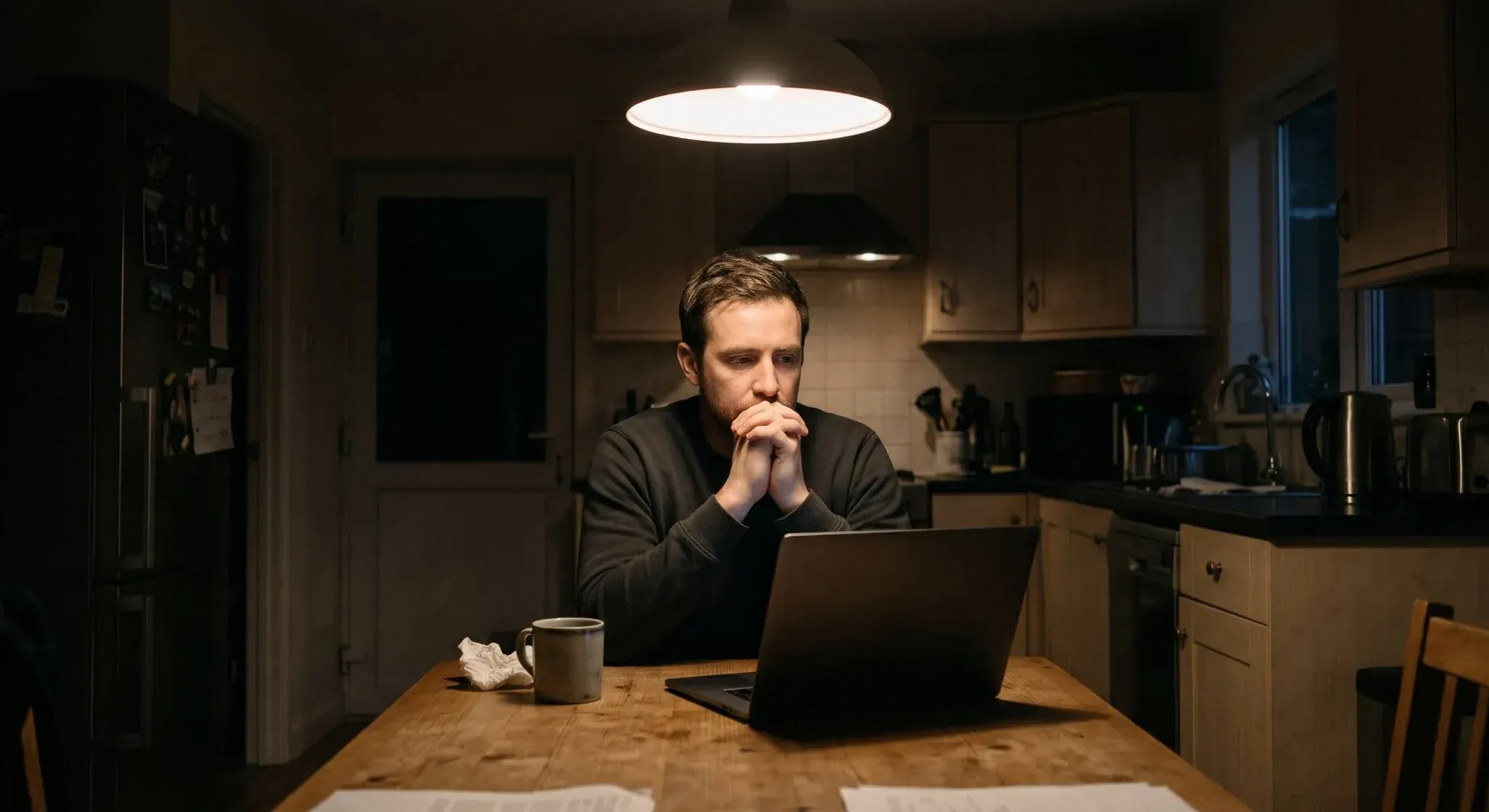
You have read the lists. Some of the signs fit the person you left. Some of them, uncomfortably, fit you.
You shouted. You checked their phone. You said things you are ashamed of. Now a quiet question has started to follow you around.
Am I the narcissist? It deserves an honest answer, not a reassuring one.
Am I the narcissist?
Probably not, if you are asking because you are worried you hurt someone and want to do better. But asking does not prove you are not one. The telling signs are what you do with the answer: whether you feel concern for the people affected, and whether you change.
Narcissism is a set of traits that everyone has to some degree: self-focus, a need for admiration, and lower empathy when under threat.
Narcissistic personality disorder is the far end of that range. It is rigid and persistent, and it causes harm across many relationships. Only a qualified clinician can diagnose it.
So there are really two questions. Do you have some narcissistic traits? Almost certainly, like everyone. Do you have a pattern that keeps hurting people while you feel entitled to it? That is a different question.
Why do survivors of narcissistic abuse ask this?
Because the relationship trained you to. Several things push survivors towards this fear.
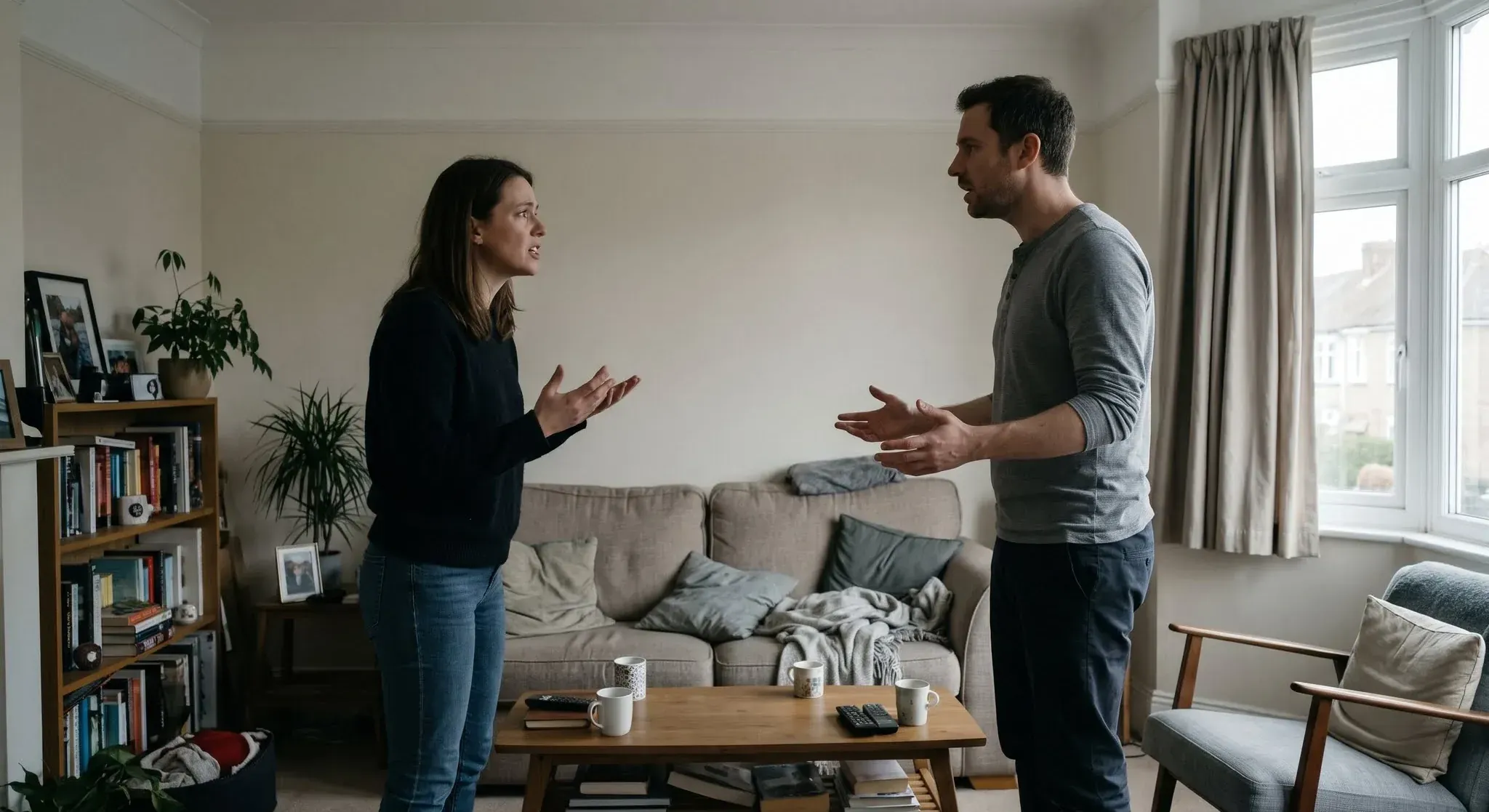
- You were told so: “You are the narcissist” is a common accusation in these relationships. Narcissistic projection covers why people accuse others of what they do.
- You reacted badly: Months of provocation can end in shouting, insults or snooping. Reactive abuse covers how those reactions get used against you.
- The roles were reversed: Raising a problem turned into a trial of your character. DARVO covers how that reversal works.
- Your memory was undermined: After long enough, you stop trusting your own account. Gaslighting covers how that happens.
- You are conscientious: People who take responsibility for their part are the ones most likely to wonder if all of it was theirs.
None of this means you behaved well every time. It means the question is being asked under pressure, by a mind that has been taught to doubt itself.
Does asking mean you are not a narcissist?
That is the popular answer, and it is too neat.
The research suggests that people high in narcissism often know it. A 2011 study found that people high in narcissism understood others saw them less positively than they saw themselves. They even described themselves as arrogant.
There is a stranger finding too. Researchers built a single-question narcissism measure that asks people how much they agree that they are a narcissist. Across 11 studies with 2,250 people, the answer correlated with much longer narcissism questionnaires.
In other words, many people high in narcissism will say yes when asked plainly. What tends to differ is not awareness but concern. They often know, and do not see it as a problem.
So a better test than asking is noticing how you feel about the answer. Distress at the thought of having hurt someone, and a wish to repair it, points away from a narcissistic pattern.
How can you tell the difference?
These are honest questions to ask yourself. They are not a diagnosis.
- When you hurt someone, what do you feel first? Concern for them, or fear of how it makes you look?
- Can you apologise without adding “but”? And can you change what you apologised for?
- Is the pattern everywhere, or in one relationship? Narcissistic traits show up across work, family and friendships. Reactive behaviour tends to cluster around one person.
- Do you feel entitled to special treatment? Or do you mostly feel guilty for taking up space?
- What do people who know you well say? People outside the relationship are a good mirror.
- Did the behaviour start before or during the relationship? Reactions that began under pressure, and fade once you are out, look more like reactions than personality.
If most of your answers point to concern, guilt and change, you are probably dealing with the damage of a hard relationship. If they point to indifference and entitlement across many relationships, that is worth taking to a professional.
Are online narcissist tests accurate?
No online quiz can tell you whether you have narcissistic personality disorder.
Research questionnaires such as the Narcissistic Personality Inventory measure narcissistic traits in groups of people. They were not built to diagnose individuals.
Most quizzes on the web are not even those. They are lists of signs with a score attached, and no evidence behind the cut-offs.
There is another problem. A survivor answering “do you get angry when criticised?” after years of being criticised will score badly for the wrong reason. The test cannot see the context.
A personality disorder can only be assessed by a qualified clinician, over time, with a full history.
What if I do have narcissistic traits?
Then you have the same thing most people have, in some amount. Traits are not a verdict.
Narcissism also changes over life. A study that followed people for 23 years found that narcissism declined, on average, from age 18 to 41. Entitlement fell the most.
A 2023 study of over 250,000 people found the same pattern across eight different measures. Narcissism was highest in young adulthood and lower with age.
If you recognise a pattern that hurts people, therapy can help. Can a narcissist change covers what the treatment research shows.
Can you become a narcissist after narcissistic abuse?
Abuse does not turn people into narcissists. It can leave you with defensive habits that look similar from outside: guardedness, anger, self-protection and difficulty trusting.
Those are responses to harm, and they usually soften as you heal. Trauma responses covers how fight and freeze reactions can outlast the danger that caused them.
Common questions
Can a victim be the narcissist? Both people in a relationship can behave badly. Abuse is about a pattern of control, not one bad moment. Look at who holds power, who fears whom, and whose behaviour changes when the other is not there.
Is it normal to wonder if I was the abuser? Yes. It is one of the most common questions survivors ask, especially after gaslighting and blame reversal.
What is the difference between narcissism and low self-esteem? Low self-esteem feels bad about the self and expects rejection. Narcissism protects a fragile or inflated self-image, often at other people’s expense. Some forms of narcissism include deep insecurity underneath.
Should I take a narcissist test? If it helps you reflect, it will not hurt. Treat the score as a prompt for questions, not an answer.
Who can tell me for sure? A licensed clinician who assesses personality. A coach cannot diagnose you, and neither can a quiz.
What to take from this
Asking “am I the narcissist?” is not proof either way. What matters is how you feel about the answer, and what you do next.
The research suggests people high in narcissism often know it and do not mind. If the thought of having hurt someone keeps you awake, that concern is the part to trust.
You can own your mistakes without taking on someone else’s diagnosis.
Where to go next. Signs of a narcissist covers the traits in full, and types of narcissists covers how differently they can present.
Self-doubt covers rebuilding trust in your own judgement, and how to heal from narcissistic abuse covers what recovery looks like.
If you want structured support untangling what happened, the 8 week narcissistic abuse recovery program starts with a free fit call.
Coaching is not therapy and is not a substitute for medical or psychiatric care. If you are in crisis, please use the support resources on this site or contact your local emergency services.