Self-Discipline: What Actually Builds It
Self-discipline is not a willpower muscle. What the research shows, why it is harder after control and abuse, and how to build it without self-punishment.
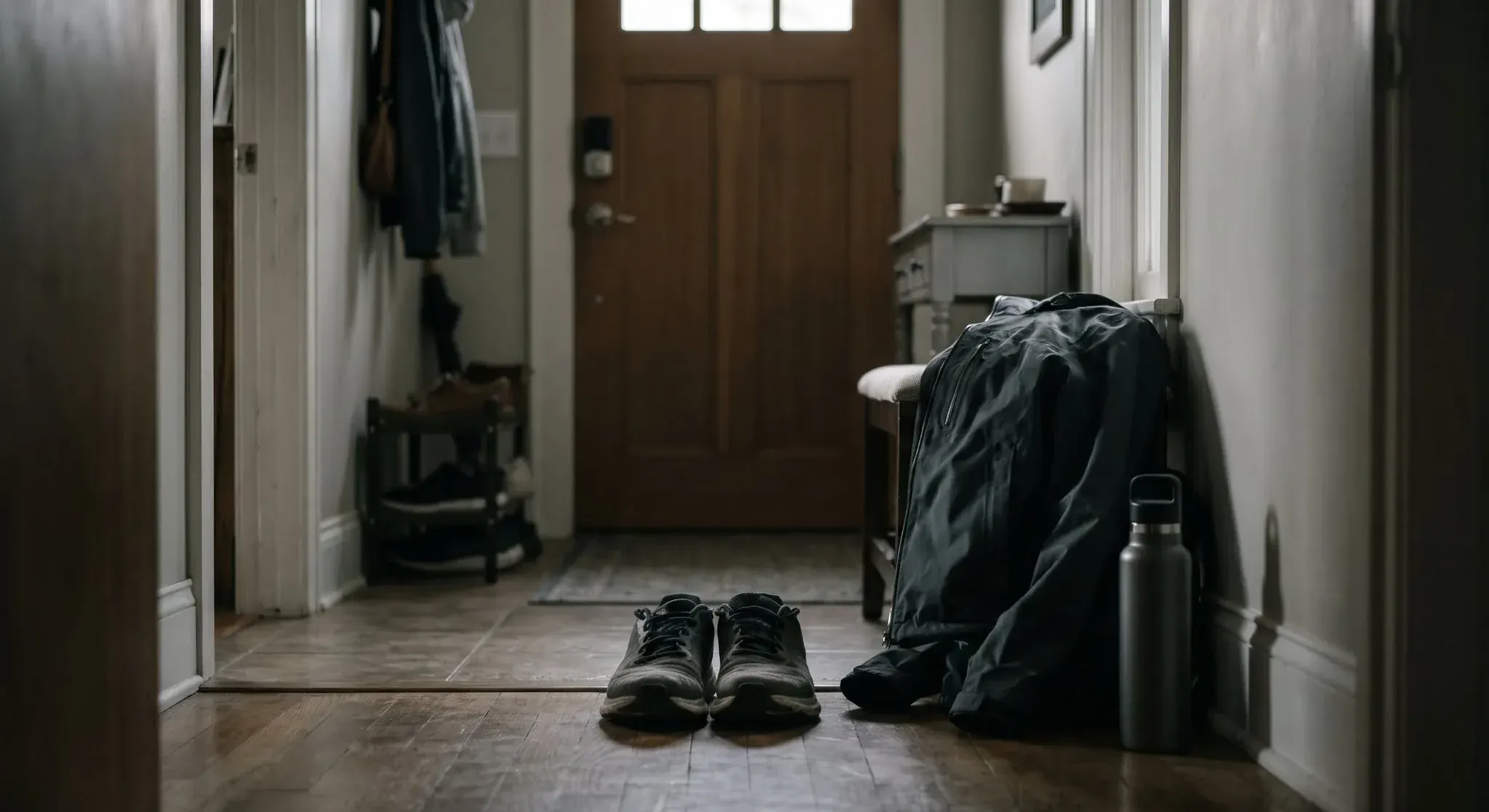
Every January the same advice comes back. Wake up earlier. Push harder. Stop making excuses.
If you spent years with someone who controlled your time, your body and your choices, that advice can land very differently. Discipline starts to sound like their voice.
Self-discipline is real, and it can be built. It just does not work the way most advice says it does.
What is self-discipline?
Self-discipline is the ability to act on what you have decided matters, even when you do not feel like it. It covers starting things, keeping going, and not doing things that pull you away from your goals.
Psychologists usually call it self-control. Research consistently links it to better health, relationships, work and wellbeing.
The popular picture is a person gritting their teeth against temptation all day. The research paints a quieter picture, and a more encouraging one.
Is self-discipline a muscle you can wear out?
Probably not in the way you were told. For two decades, a popular theory held that self-control was a limited resource that ran down with use. Psychologists called it ego depletion.
Then large teams tried to repeat the original experiments under strict, pre-registered conditions.
A 2016 replication across 23 laboratories tested 2,141 people. The ego-depletion effect was close to zero (d = 0.04), and the confidence interval included zero.
A 2021 project across 36 laboratories tested 3,531 people with different methods. Its pre-registered tests also found no clear effect. The data were four times more likely under no effect than under a modest one.
The debate is not fully closed. Exploratory analyses hinted at a small effect in people who felt more fatigued.
What has collapsed is the idea that your discipline drains like a battery every time you resist a biscuit. If you keep failing, it is not because you ran out.
What do disciplined people actually do?
They resist temptation less often. That is the surprising finding.

A 2015 set of six studies with 2,274 people asked why self-control predicts good outcomes. The answer was habits.
People with more self-control had stronger habits for sleep, exercise, healthy eating and study. Those habits explained much of their success. They also reported using less effortful willpower, not more.
A 2014 study found the same pattern with snacking. Self-control predicted less unhealthy snacking, and habit strength explained the link.
So the disciplined person is not winning a daily war with themselves. They set things up so the war rarely starts.
Why is self-discipline so hard after narcissistic abuse?
Because control was used against you, and your body remembers.
If someone policed your spending, your eating, your sleep or your friendships, structure itself can feel threatening. A schedule can feel like a cage. A rule you set for yourself can trigger the same tightness as a rule that was set for you.
There is also exhaustion. Living on high alert drains energy that would otherwise go into goals. Narcissistic abuse and the nervous system covers what that long strain does to the body.
From the outside, a nervous system in freeze looks like laziness. From the inside, it feels like wading through wet concrete.
And there is the inner critic. Many survivors carry the abuser’s voice forward, calling themselves useless or weak whenever they slip. It feels like motivation. It works against you.
Does being hard on yourself build discipline?
No. The evidence points the other way.
A 2012 set of four experiments compared self-compassion with a self-esteem boost after a failure. The self-compassionate groups were more motivated to improve.
They spent longer studying for a hard test after failing it. They were more motivated to make amends and avoid repeating a mistake.
The authors called this somewhat paradoxical. Accepting your failure made people work harder to fix it.
The experiments used students and short tasks, so they cannot promise the same for a long recovery. They do undercut the belief that you need to be your own harshest critic to change.
The drill sergeant in your head is not your discipline. It is often the reason you quit.
How do you build self-discipline?
You build it the way the research says disciplined people already work: with habits, a shaped environment and a kinder voice.

- Choose one habit, not ten: Pick the single behaviour that would make the most difference. New Year lists collapse under their own weight.
- Make it small enough to be boring: Two minutes of the thing beats an hour you never start. Repetition builds the habit, not intensity.
- Tie it to something you already do: After the kettle, after brushing your teeth, after you park the car. An existing routine carries the new one.
- Shape your space: Put the trainers by the door and the phone in another room. Less temptation means less willpower needed.
- Plan for the slip: Decide now what you will do when you miss a day. “Never miss twice” is kinder than starting from zero.
- Talk to yourself like a coach, not a captor: When you slip, name it plainly and get back on. Self-attack makes the next slip more likely.
- Reclaim structure as yours: Remind yourself that this rule is your choice and you can change it. Discipline you chose is not control.
If low energy, poor sleep or hopelessness make even small steps impossible, that may be depression, not a discipline problem. A doctor or therapist is the right first step, and crisis support lists services if you feel unsafe.
Common questions
What is the difference between self-discipline and willpower? Willpower is resisting an urge in the moment. Self-discipline is the wider ability to follow through on goals, and the research suggests it relies more on habits than on willpower.
Can you learn self-discipline as an adult? Yes. Habits form at any age through repetition in a stable context. Starting small makes it far more likely to stick.
Why do I have no self-discipline? Usually it is not missing. It is buried under exhaustion, a harsh inner critic, or a nervous system that associates structure with being controlled.
How long does it take to build self-discipline? There is no fixed number of days, and it varies from person to person and habit to habit. Missing an occasional day does not wipe out the progress.
Is self-discipline the same as self-control? They are close. Psychologists mostly use “self-control”, while everyday speech says “self-discipline” for the same ability.
What to take from this
Self-discipline is not a reserve of grit that some people were born with. It is mostly the habits and surroundings you build, plus how you speak to yourself when you slip.
The willpower-battery idea has not held up in large replications. Habits and self-compassion have better evidence behind them.
After control, discipline can be the thing that gives your life back to you. It works best when it finally answers to you.
Where to go next. Self-sabotage covers why you might break a good routine just as it starts working.
Hyper-independence covers the opposite trap, where you push through everything alone.
Self-worth covers the belief underneath many failed goals, and who am I after narcissistic abuse covers rebuilding an identity that is yours.
If you want structured support building discipline that lasts, self-mastery coaching is a 10 week program for the stage after recovery.
Coaching is not therapy and is not a substitute for medical or psychiatric care. If you are in crisis, please use the support resources on this site or contact your local emergency services.