Emotional Flashbacks: Signs and How to Cope
An emotional flashback is old fear or shame arriving with no memory attached. What it feels like, why it happens after abuse, and how to come back to the present.

An email arrives from your manager. Two lines, slightly curt. Within seconds your chest is tight, your face is hot and you feel about eight years old.
Nothing in the email justifies that. You know it. You still cannot think your way out of it for the rest of the afternoon.
That is what an emotional flashback usually looks like. No pictures, no replay of a scene, just the full weight of an old feeling landing in an ordinary moment.
What is an emotional flashback?
An emotional flashback is a sudden return of feelings from past trauma, most often fear, shame or helplessness, without a clear memory of the event that caused them. Something in the present echoes the past, and the body responds as if the old danger were back.
The term comes from the psychotherapist Pete Walker, who wrote about it in his work on complex PTSD. It is a clinical description, not a formal diagnosis, and you will not find it in the diagnostic manuals.
What makes it confusing is the missing memory. A classic PTSD flashback often comes with images. An emotional flashback brings only the feeling, so it looks like you are overreacting to the present.
Are emotional flashbacks real?
The experience is real and widely reported. The name is a clinician’s label rather than a research category, so it helps to know where the research does sit.
Flashbacks in general are under-studied. The trauma researcher Chris Brewin noted in a 2015 review that relatively little research had been done on them, even though they are central to PTSD.
The closest research home for emotional flashbacks is complex PTSD (CPTSD) in the World Health Organization’s ICD-11. Alongside the core PTSD symptoms it adds what are called “disturbances in self-organisation”: problems regulating emotion, a deeply negative sense of self, and difficulty in relationships.
A review of the ICD-11 evidence found that CPTSD identifies a distinct group of people who have more often lived through multiple, sustained traumas. That is the kind of history that produces emotional flashbacks: not one event, but years of it.
What does an emotional flashback feel like?
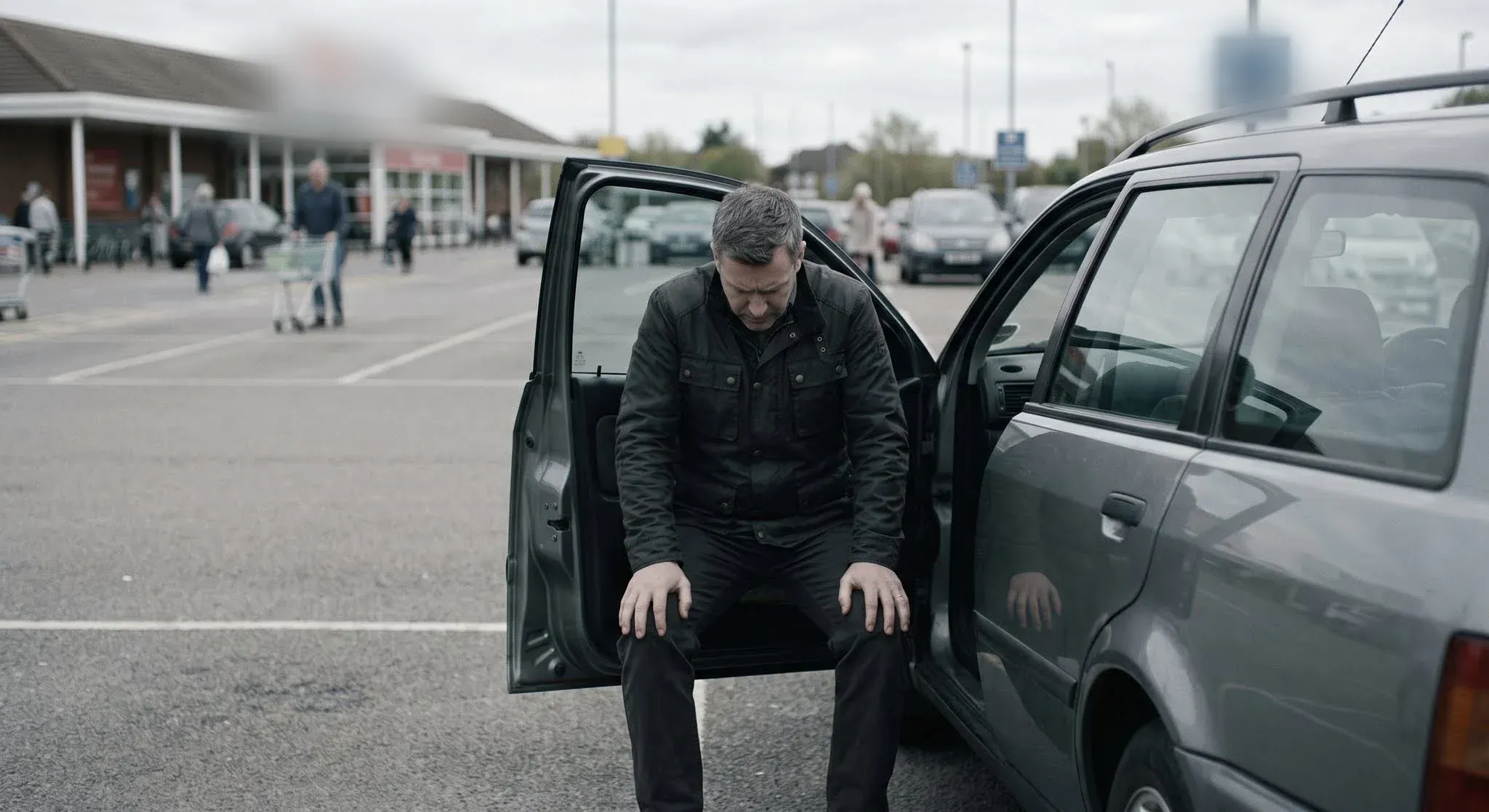
Most people describe some mix of these:
- Feelings far bigger than the situation: A mild criticism lands like a catastrophe, or a delayed reply feels like abandonment.
- Feeling small: A sense of shrinking into a younger, powerless version of yourself, sometimes with a childlike voice in your head.
- Shame that arrives from nowhere: A conviction that you are defective, stupid or about to be found out.
- A body in alarm: Racing heart, shallow breathing, a tight throat, a hot face, or a sudden wish to hide.
- Freezing or going blank: You lose words, cannot think clearly, or feel foggy.
- An inner critic at full volume: Harsh, familiar sentences that sound like someone from your past.
The giveaway is the mismatch. If your reaction would make sense to a frightened child facing a powerful adult, but not to an adult reading an email, you are probably in a flashback.
What does a PTSD flashback look like to someone else?
Often, very little. An emotional flashback is mostly internal, which is part of why it is so lonely.
From the outside you might see someone go quiet or withdrawn, over-apologise, become suddenly irritable or defensive, or leave the room. Some people look calm while feeling terrified inside.
This is why partners and colleagues often misread it as sulking, coldness or a bad mood. Being able to name it, even just to yourself, changes how you handle it.
What triggers emotional flashbacks?
Triggers are usually small and relational. They echo the tone of the original harm rather than its details.
- A tone of voice: Sharpness, coldness, or a particular kind of sigh.
- Criticism or disapproval: Especially from someone with authority over you.
- Silence: A delayed reply or someone going quiet, if the silent treatment was used against you.
- Being ignored or dismissed: Having your feelings waved away.
- Conflict: Raised voices or even mild disagreement.
- Your own state: Exhaustion, hunger, illness and overwhelm all lower the threshold.
After a relationship with a narcissistic partner or parent, the triggers often map closely onto that person’s habits. Their tone, their silences, the specific way they showed disapproval.
Why do emotional flashbacks happen after narcissistic abuse?
Because abuse that was mostly psychological is exactly the kind that shapes the nervous system this way.
A study of 147 women in Danish shelters found that 21% had symptoms of complex PTSD. Psychological violence was the strongest risk factor for every mental health outcome measured. Once it was accounted for, physical and sexual violence no longer predicted those outcomes.
Shame is a large part of the mechanism. A study of 240 psychiatric inpatients found that the link between childhood trauma and CPTSD symptoms ran partly through shame and a sense of moral injury.
That fits what people describe. The flashback is not only fear. It is fear plus the old verdict that the fear, and you, are the problem.
In my own recovery and in coaching work, I think of it as the body keeping a record that the mind has filed away. The words are gone. The alarm is still wired in.
What is happening in your body?
An emotional flashback is the body’s threat response firing in the present for a danger that belonged to the past.
Researchers describe that response as a defense cascade: arousal, then fight or flight, then freezing, then in more extreme cases shutting down.
A flashback can drop you anywhere on that sequence. Some people get the racing heart of fight or flight. Others go blank and still.
That explains why you cannot simply reason your way out. By the time you notice, the reaction is already running, and thinking is one of the first capacities to go offline.
Narcissistic abuse and the nervous system covers this response in more depth.
How long do emotional flashbacks last?
Anywhere from a few minutes to several days.
Short ones pass once the trigger is gone. Longer ones, especially if nobody names them, can colour a whole weekend: you feel low, ashamed and on edge without knowing why.
Recognising a flashback usually shortens it. Once you know what is happening, you stop treating the feeling as information about the present, and it tends to lose its grip sooner.
How do you stop an emotional flashback?
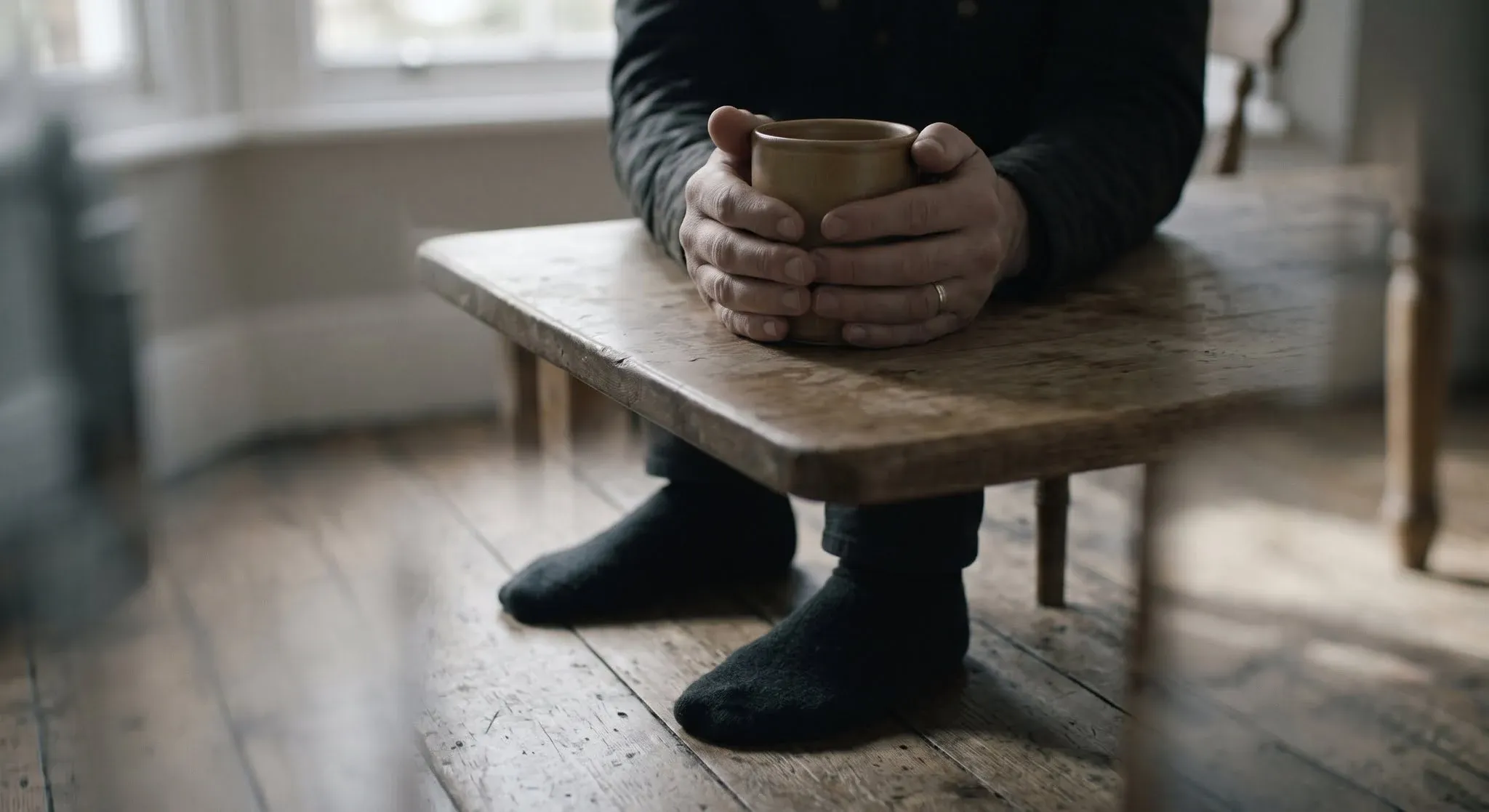
You cannot always stop one starting. You can get better at coming back from it. These steps work best practised on calm days, so they are ready when you need them.
- Name it. Say, silently or out loud, “I am having an emotional flashback.” Putting a feeling into words has measurable effects. In a brain-imaging study, labelling emotions reduced activity in the amygdala, part of the brain’s threat system.
- Separate then from now. “I feel unsafe. I am actually safe. I am an adult, and I have choices I did not have then.”
- Come back through your senses. Feel your feet on the floor. Hold something warm. Name five things you can see. Slow your exhale so it is longer than your inhale.
- Watch the inner critic. When the familiar harsh voice starts, notice whose voice it sounds like. You do not have to argue with it. Just do not take it as the truth.
- Speak to yourself as you would to a frightened child. Short, kind, practical sentences. “This will pass. You did nothing wrong. Let’s get a glass of water.”
- Reduce the load. If you can, step away from the trigger, postpone the reply, and avoid big decisions until the feeling has passed.
- Look for the trigger afterwards. Once you are calm, not during, ask what set it off. Patterns become visible over weeks.
One finding worth knowing: in a set of studies on affect labelling, naming feelings lowered distress about as much as deliberate strategies like reappraisal. Yet people consistently predicted it would make them feel worse. If naming the flashback feels pointless, do it anyway.
Somatic exercises has more body-based techniques, and dissociation covers the version of this where you go numb and distant instead.
Are emotional flashbacks the same as a panic attack or a meltdown?
They overlap, but they are not the same.
A panic attack is a surge of physical fear, often with a racing heart and a sense of dying or losing control, that peaks within minutes. An emotional flashback is centred on old feelings, especially shame and helplessness, and can last much longer.
A meltdown is what some people call the moment a flashback spills over into tears, shouting or shutting down. It is not a separate condition. It is what happens when a flashback goes unrecognised until it becomes too big to contain.
Can emotional flashbacks be healed?
They can become less frequent, shorter and less intense. Most people find they do not disappear completely, but they stop running their lives.
The research on complex PTSD is encouraging. A meta-analysis of 51 trials found that trauma-focused CBT, exposure therapy and EMDR all reduced PTSD symptoms, and several also improved negative self-concept and relationship difficulties. Trauma that began in childhood was linked to poorer outcomes, which is a reason for patience, not for giving up.
There has been debate about whether people with CPTSD need a “stabilisation” phase before working with trauma memories. A 2026 meta-analysis found no clear difference on most outcomes, though multi-phase approaches did better on emotion regulation specifically. The practical point: several approaches can work, and fit matters.
If flashbacks are frequent, severe or come with thoughts of harming yourself, work with a trauma-trained therapist. Coaching can help with rebuilding your life around them, but it is not trauma treatment. Crisis support lists where to go first if you are in danger.
Common questions
What is the difference between an emotional flashback and a regular flashback? A regular PTSD flashback often includes images or sensations of the event, as if it were happening again. An emotional flashback brings back the feelings without the scene.
Can you have emotional flashbacks without CPTSD? Yes. Many people with difficult childhoods or past abusive relationships describe them without meeting the full criteria for any diagnosis.
Can emotional flashbacks happen in relationships? Very often. Close relationships are where the old feelings were learned, so a partner’s tone or silence is one of the most common triggers.
Is rumination an emotional flashback? Not exactly, but they feed each other. A flashback can set off hours of replaying and self-blame, and that rumination can keep the feeling going.
Should I tell my partner about emotional flashbacks? If they are safe, yes. A shared word for it, and an agreed way to pause a conversation, can stop a flashback turning into a fight.
Why do emotional flashbacks make me feel like a child? Because the feeling was first learned when you were one. The body brings back the emotional state it was in, including how powerless you were.
What to take from this
An emotional flashback is not an overreaction. It is an accurate reaction to something that is no longer happening.
That distinction is the whole skill. You are not trying to stop feeling. You are learning to tell the difference between the alarm and the present, and to look after yourself while the alarm runs its course.
The shame that comes with a flashback is part of the flashback. It is not a verdict on you.
Where to go next. The fawn response covers the people-pleasing reflex many flashbacks trigger, and narcissistic abuse syndrome covers the wider pattern of symptoms, including CPTSD.
Dorsal vagal shutdown covers the heavy, shut-down end of the threat response. Inner child covers the self-compassion work behind the kind voice in step 5.
If you want support building a life that is not organised around the next trigger, the 8 week narcissistic abuse recovery program is a place to start.
Coaching is not therapy and is not a substitute for medical or psychiatric care. If you are in crisis, please use the support resources on this site or contact your local emergency services.