Inner Child Work: Does It Actually Work?
There is no inner child in the research, and the thing it points at is real. What the clinical version is called, what its trials show, and what to skip.
The most searched question about this is not how to do it. It is whether it works, usually followed by the word “reddit”.
Fair question, and here is the straight answer. There is no inner child in the research literature. There is no measure of it and no trial of it.
What the phrase points at is real. It has a clinical name, and that version does have randomised trials behind it.
Knowing which part is which saves you from both dismissing the whole thing and spending two years journaling at a metaphor.
Is the inner child real?
Not as an entity, and the distinction matters more than it sounds.
There is no separate younger self living inside you. Nothing is preserved intact at age six waiting to be spoken to. If a practitioner describes it that way as literal fact rather than as imagery, they have left what is known.
What is real is simpler and better evidenced. Conditions in childhood shape the rules you run as an adult, and those rules do not update themselves.
Long-running cohort studies have established that childhood trauma predicts adult mental health outcomes. The association is not just an artefact of people remembering their childhoods through the lens of current distress.
So: the causal link is real. The homunculus is a metaphor.
What is the clinical version called?
Schema therapy, and this is the piece almost no inner child article tells you.
Schema therapy works with what it calls modes, including a vulnerable child mode, and with early maladaptive schemas, which are the durable rules formed when core needs went unmet. That is the same territory, described in a way that can be measured.
The difference is that it has been tested. A systematic review and meta-analysis pooled eight randomised controlled trials covering 587 participants, plus seven single-group trials.
The results, with the caveats attached:
- Moderate overall effect against control conditions, a Hedges’ g of 0.359.
- Larger effect on the schemas themselves, g of 0.590. It moves the thing it targets.
- Moderate improvement in quality of life, g of 0.256.
Then the finding that should change what you do.
Group schema therapy substantially outperformed individual schema therapy. A g of 0.859 against 0.163.
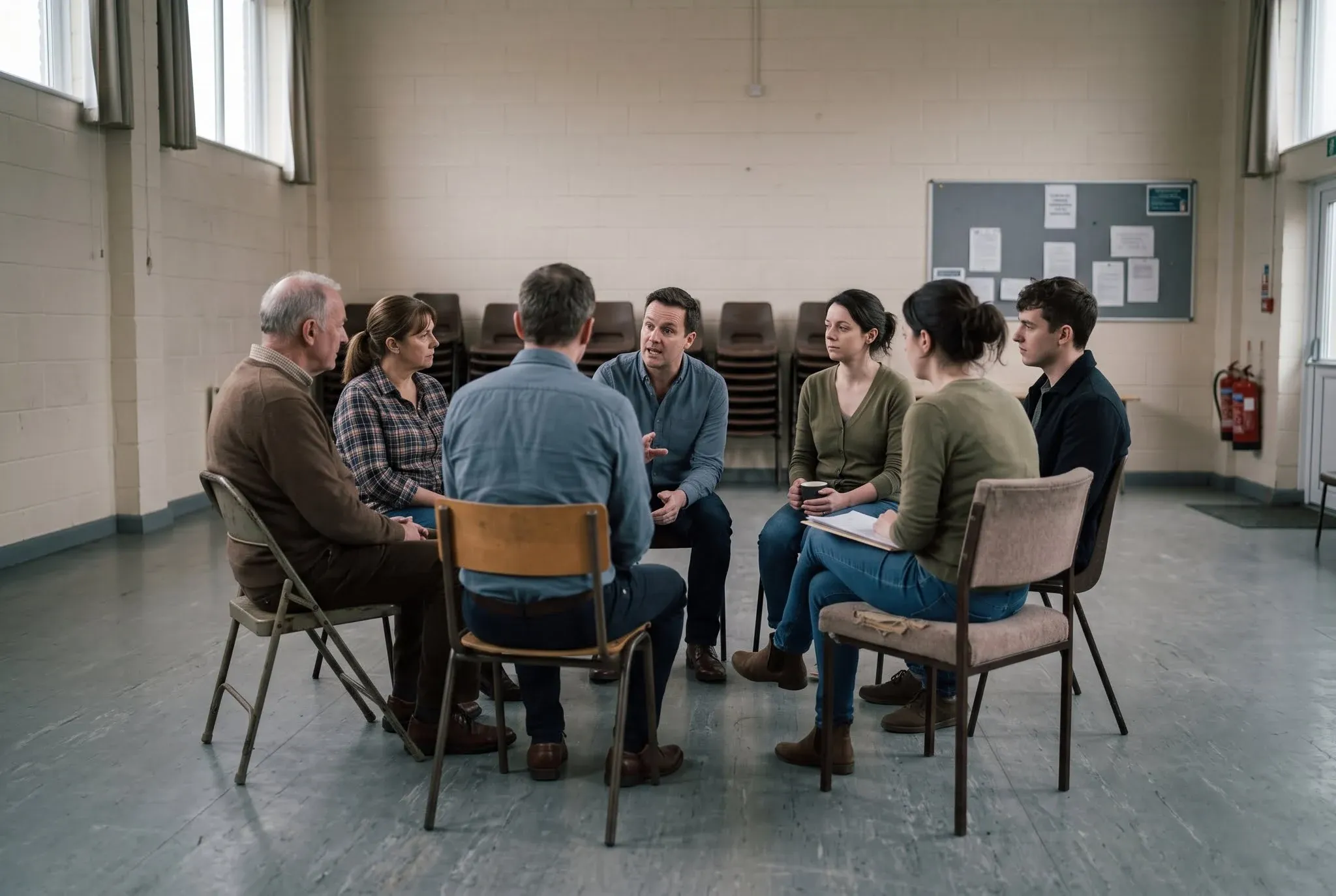
That gap is enormous, and it points in the opposite direction from how inner child work is usually sold. The version with the strongest evidence involves other people in a room. The version most people attempt is a person alone with a journal.
One honest limit: those trials were in personality disorders, which is a specific clinical population. Applying the numbers directly to a generally functioning adult with a difficult childhood is a stretch, and the direction of the finding is still worth knowing.
So what does inner child work actually involve?

Stripped of the imagery, three steps. This is what the useful version does regardless of what it is called.
1. Find the rule, not the memory. The work is not recovering what happened. It is identifying the instruction you took from it. Do not need anything. Read the adult before you speak. Being useful is how you stay safe.
2. Test whether it still holds. Most of these rules were accurate at the time. That is why you adopted them. Asking for something now does not produce the consequence it produced then, and the rule has never been checked against current conditions.
3. Practise the new behaviour while it feels wrong. It will feel wrong for months. That is the rule being overwritten, not evidence you are doing it badly.
Notice what is missing. No visualisation is required for any of that. The imagery is optional packaging on a fairly ordinary relearning process.
Does the guided visualisation help or hurt?
Both, depending on the person, and this is where I would be most careful.
The classic exercise involves picturing yourself as a child and speaking to them. For some people it unlocks compassion that direct self-talk cannot reach.
For others it is destabilising, particularly anyone who dissociates. Eyes-closed work that deliberately approaches painful material can produce flooding rather than relief.
Stop and change approach if a practice reliably leaves you worse for the rest of the day. Same if you lose time, or get imagery you cannot close down. The same cautions apply as for somatic exercises, and for the same reason.
None of that means you failed. It means the entry point is wrong for you right now.
What about the “inner child wounds” lists?
You will find confident lists of five or seven wounds, usually abandonment, guilt, trust, neglect and humiliation.
These are editorial, not empirical. No validated instrument produces them, different sources give different counts, and nobody agrees on the boundaries. They are the same phenomenon as the competing lists of narcissist types.
They can still be useful as vocabulary. Having a word for the thing that keeps happening is genuinely helpful. Just do not treat the category you land in as a diagnosis, and be suspicious of any quiz that assigns you one.
Does this apply after narcissistic abuse?
Directly, and more so if the abuse was from a parent.
A child in that house learns a specific and coherent set of rules, and they were correct. They are the reason the house was survivable. Nobody tells you when they expire, so they keep running through adult relationships that do not require them.
The two places this shows up most are covered separately. Narcissistic parents deals with the relationship itself and what it does to adult children. Self-abandonment is the specific adult habit those rules train for, which is overriding your own needs automatically to keep someone else comfortable.
Where the abuse was from a partner rather than a parent, this work is usually less central than people expect. The rules installed in adulthood are more recent and less deep, and the trauma bond is generally the more urgent target.
If your childhood looked fine but felt lonely, emotionally immature parents may explain why. Childhood emotional neglect describes what that loneliness tends to leave behind.
Common questions
Does inner child healing actually work? The concept has no evidence of its own because it has never been tested as such. Its clinical translation, schema therapy, has a meta-analysis showing moderate effects, with group delivery substantially outperforming individual work.
How long does it take? Longer than a weekend course. The schema trials ran for months, and the honest expectation is a gradual shift in what feels automatic rather than a single releasing moment.
Can I do this on my own? Partly. Identifying rules and practising new behaviour is genuinely doable alone. The evidence points toward other people mattering considerably, which is an argument against doing all of it in a notebook.
Do I need to remember what happened? No. The work is on the rule, and the rule is visible in your present-day behaviour. Memory retrieval is not the mechanism and chasing it can cause problems.
Is this the same as reparenting? Overlapping vocabulary from the same tradition. Both point at meeting needs that went unmet. Neither term appears in the trial literature, where the language is schemas and modes.
What to take from this
The scepticism that brought you here was well placed, and it should not become dismissal.
The metaphor is just a metaphor. No small version of you is in there, and the lists of wounds are made up.
The mechanism underneath it is solid. Childhood conditions install rules, those rules persist, and the clinical approach built on that idea has randomised trials showing moderate benefit.
If you take one practical thing from the evidence, take this. The tested version of this work happens with other people, and it outperformed the solo version by a wide margin. That is the opposite of how it is usually sold to you.
Coaching is not therapy and is not a substitute for medical or psychiatric care. If you are in crisis, please use the support resources on this site or contact your local emergency services.