Guilt Tripping: Signs, Phrases and Responses
Guilt tripping turns your care into a lever. What it is, the phrases it uses, how it differs from gaslighting and emotional blackmail, and what to say back.

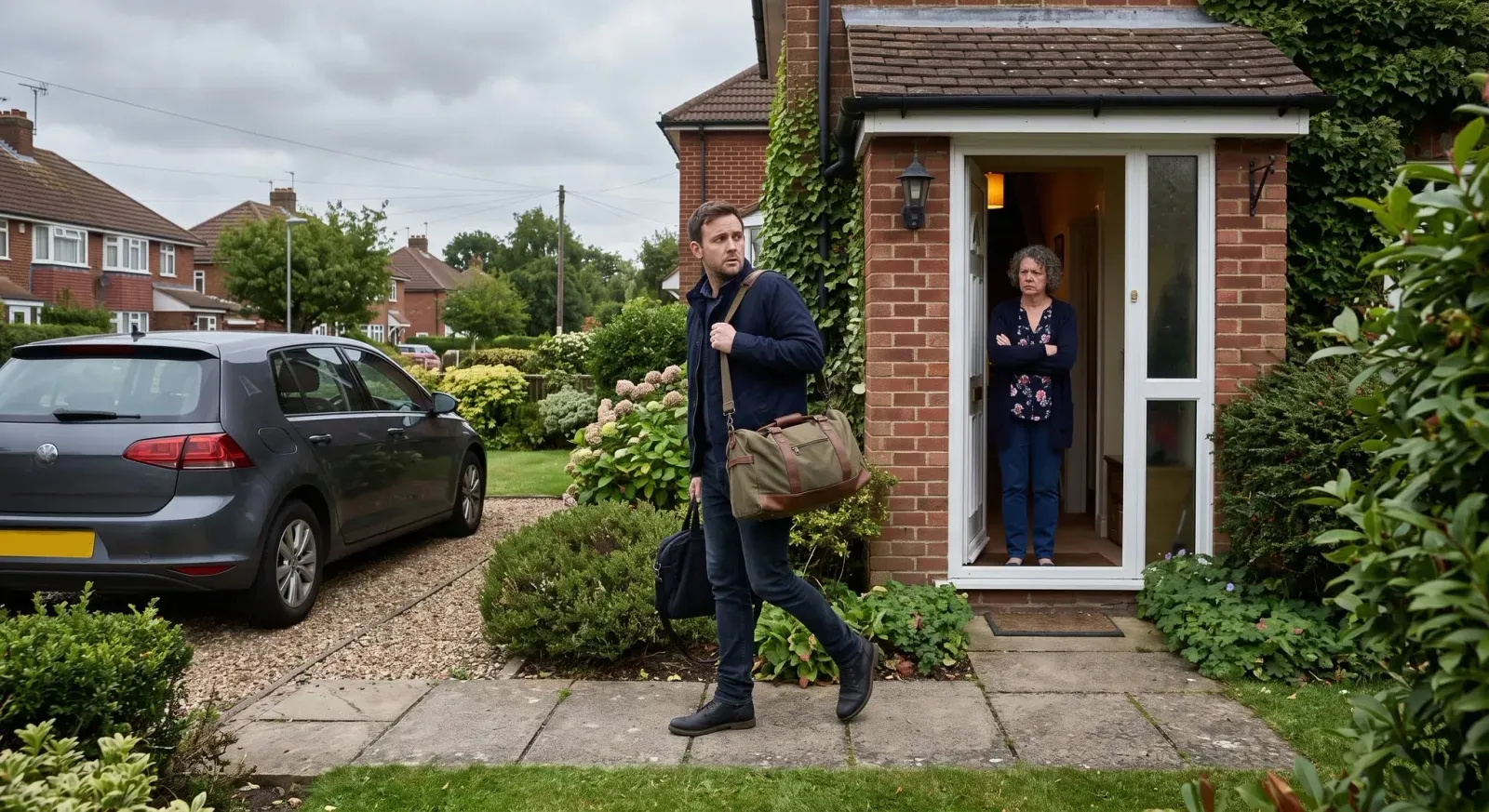
You had a plan. Then one phone call, one sigh, one “no, it’s fine, you go”, and the plan was gone.
Nobody forbade anything. You just could not do it anymore without feeling like a bad person.
That is guilt tripping. It works on you not because you are weak but because you care, and understanding that is the first step to making it stop working.
What is guilt tripping?
Guilt tripping is making someone feel guilty in order to change what they do. The guilt is the tool, and your behaviour is the target.
It is usually indirect. Instead of asking plainly, the person signals hurt, disappointment or sacrifice. You are left to supply the conclusion yourself: that you are letting them down, and the decent thing is to give in.
The person doing it is sometimes called a guilt tripper, or, in the older phrase, a martyr.
Why does guilt tripping work so well?
Because guilt is a relationship emotion, and it is strongest with the people you care about most.
A review of the research on guilt argued that guilt is an essentially social phenomenon. It is strongest and most consistent in close relationships built on mutual concern. One of its normal functions is enabling less powerful partners to get their way, and another is spreading emotional distress around.
In a healthy relationship that is useful. Guilt stops you taking people for granted.
Guilt tripping hijacks that system. It borrows an emotion designed to keep relationships fair and uses it to make one of them unfair. That is why it works best on kind, conscientious people, and least on people who do not care.
What are the signs of guilt tripping?
- Reminders of past sacrifices: Favours, gifts or years of support brought up whenever you want something different.
- Martyrdom: They will do it all themselves, it is fine, they are used to it.
- Sighs and silences: Hurt communicated passive-aggressively, through tone and withdrawal instead of words.
- Comparisons: Other children, partners or friends who would never treat them like this.
- Illness or distress timed to your plans: A crisis that arrives exactly when you were about to leave.
- Your no treated as an injury: A reasonable refusal is received as if you had caused real harm.
- No direct request: You are never quite asked. You are left to work out what you are supposed to do.
What are common guilt tripping phrases?
These are the guilt tripping examples people recognise most often.
| What they say | What it is doing |
|---|---|
| “After everything I’ve done for you.” | Turning past care into a debt |
| “If you really loved me, you would.” | Making your love conditional on compliance |
| “No, it’s fine, you go. I’ll be on my own.” | Punishing you for leaving while appearing to allow it |
| “I guess I’m just not important to you.” | Making their feelings your responsibility |
| “Your sister would never do this to me.” | Using comparison to shame |
| “Don’t worry about me.” | Ensuring you worry about them |
| “I’m not angry, just disappointed.” | Delivering hurt without anything to answer |
What guilt tripping feels like is often clearer than the words. A sinking feeling, a sudden sense that your perfectly reasonable plan is selfish, and relief only when you give in.
Is guilt tripping manipulation?
Yes. It is influence that works by pressing on your emotions rather than by asking you openly, which is what manipulation means.
That does not mean every guilty feeling in a relationship is manipulation. The difference between guilt tripping and expressing feelings is what the person wants you to do with them.
Someone expressing a feeling says “I was really hurt when you cancelled” and lets you respond. Someone guilt tripping uses the hurt to get a specific result, and keeps using it until they get it.
Emotional manipulation covers guilt tripping alongside every other common tactic.
Can guilt tripping be unintentional?
Often, yes. Many people guilt trip because it was how their own family communicated. They may have no model for simply asking for what they want.
Intention matters for how you judge them. It matters much less for how you respond. Guilt that is used as a lever, repeatedly, has the same effect on you whether it is deliberate or habitual.
The test is the same as for most patterns: name it once, calmly, and watch what happens. Someone who did not mean it can usually adjust. Someone who did will escalate.
Is guilt tripping a form of emotional abuse?
It can be. Occasional guilt tripping is a bad habit. Constant guilt tripping, used to control where you go, who you see and what you do, is part of emotional abuse.
When it runs alongside isolation, monitoring or threats, it sits inside coercive control.
Is a guilt trip a red flag? One guilt trip is not. A pattern of them, especially early in a relationship and especially around your time with other people, is.
What is the difference between guilt tripping and gaslighting?
Guilt tripping makes you feel bad about what you want. Gaslighting makes you doubt what you know.
A guilt trip says “how could you do this to me”. Gaslighting says “that never happened”. They often appear together, because a person who doubts their own memory is easier to make feel guilty.
Guilt tripping often works alongside moving the goalposts, where nothing you do is ever enough.
What is emotional blackmail?
Emotional blackmail is guilt tripping with a threat attached. The therapist Susan Forward, who popularised the term, described the pressure it runs on as FOG: fear, obligation and guilt.
Guilt tripping mostly uses the guilt. Emotional blackmail adds the fear: of them leaving, of them harming themselves, of what they will tell other people, of losing access to children or money.
If someone threatens to harm themselves to control what you do, take the threat seriously and involve emergency services or a crisis line rather than carrying it alone. Their safety matters, and it is not your job to manage it by giving in. Crisis support lists services that can help.
How do parents guilt trip their children?
Often through sacrifice, illness and disappointment. “I gave up everything for you.” “You never call.” “I won’t be around forever.”
Researchers call this guilt induction, and they treat it as one form of parental psychological control. That is control aimed at a child’s feelings and inner life rather than their behaviour. A 1996 study found psychological control consistently predicted depression in young people.
A 2026 meta-analysis of 36 studies found all forms of psychological control linked to social anxiety in children and teenagers. Guilt induction was less strongly linked than love withdrawal or authority assertion, which is worth knowing. It is not harmless, and it is not the most damaging form either.
Where guilt was part of a wider pattern of being kept close, enmeshment covers how that family system works.
How do you respond to guilt tripping?

- Name the feeling, keep the decision: “I can hear you’re disappointed. I’m still going.” Acknowledging their feeling does not mean you are responsible for fixing it.
- Do not over-explain: Every extra reason gives them something to argue with. One sentence is enough.
- Answer the request, not the hint: “Are you asking me to stay?” turns an indirect message into a direct one, which is much easier to answer.
- Separate their feelings from your choice: They are allowed to be sad. You are allowed to go anyway. Both can be true.
- Expect a second round: The pressure usually increases the first few times it stops working.
- Notice who benefits from your guilt: If your guilt always ends with you doing what one particular person wants, that is information.
If you struggle to hold the line at all, people pleasing covers why a no feels so expensive and how to rebuild the skill.
My husband or partner guilt trips me. What should I do?
Start by naming the pattern once, when things are calm: “When I make plans without you, I get the silent treatment and I end up cancelling. I want that to change.”
Then watch what happens over the following weeks. A partner who guilt trips out of habit can usually learn to ask directly. A partner who uses guilt to control you will escalate, or will find another lever, such as the silent treatment.
If you are afraid of how they will react, prioritise your safety over the conversation. Crisis support lists services that can help you plan.
How do you stop guilt tripping yourself?
By treating guilt as information to check, not a verdict to obey.
Ask what rule you think you broke. If you did something wrong, repair it. If the only rule you broke was “never disappoint anyone”, the guilt is out of date. It fades with repetition, not with reassurance.
How do you stop guilt tripping other people?
Ask for what you want directly. “I’d love it if you came on Sunday” is more likely to work, and far less likely to breed resentment, than “I suppose you’re busy again”.
If you noticed yourself in the phrases above, that is not evidence you are a bad person. It is usually a habit learned somewhere guilt was the only way needs were ever met.
Common questions
What is an example of guilt tripping? A parent who says “don’t worry about me, I’ll just sit here alone” when you mention a weekend away. The words allow it and the tone forbids it.
Is guilt tripping toxic? Occasional guilt trips are common and fixable. A steady pattern used to control you is harmful and worth taking seriously.
Why do I feel guilty when I did nothing wrong? Because guilt was trained to fire when someone is disappointed, not when you have done harm. Those are different things, and learning to tell them apart is most of the work.
Is guilt tripping a sin? Many faith traditions value honesty and speaking plainly, which guilt tripping undermines. How your own tradition frames it is a question for your community.
Does guilt tripping work? In the short term, often. Over time it breeds resentment, because people who comply out of guilt rarely feel warmly about it.
What is the difference between guilt and shame? Guilt says “I did something bad”. Shame says “I am bad”. Guilt tripping often slides from the first into the second.
What to take from this
Guilt tripping works because you care. That is not a flaw to fix. It is the part of you that is being used.
You can keep caring and stop complying. Their disappointment is real, and it is still theirs to carry.
The kindest thing you can do for a relationship run on guilt is to stop paying in it, and see what is left when you do.
Where to go next. Emotional abuse covers the wider pattern guilt tripping often sits inside, and people pleasing covers why saying no feels so costly.
Enmeshment covers families where guilt keeps everyone close, and boundaries with a narcissist covers holding a line where it will be pushed.
If you want structured support, the 8 week narcissistic abuse recovery program is built for exactly this. If there is any question of danger, start with crisis support.
Coaching is not therapy and is not a substitute for medical or psychiatric care. If you are in crisis, please use the support resources on this site or contact your local emergency services.