Emotionally Immature Parents: Signs and Types
Emotionally immature parents fed and housed you but could not meet you emotionally. The signs, Lindsay Gibson's four types, the research, and what helps now.

You can describe your childhood and it sounds fine. There was food, a roof, school, maybe holidays. Nobody hit you.
And yet you grew up lonely in a full house. Your feelings were too much, or beside the point. You learned early that your job was to keep your parent steady, not the other way round.
That is the pattern most people mean by emotionally immature parents. Not cruelty, usually. An absence where emotional attunement should have been.
What is an emotionally immature parent?
An emotionally immature parent is one who cannot reliably handle feelings, their own or their child’s. They may meet a child’s distress with anger, dismissal, panic or withdrawal. The child ends up managing the parent’s emotions instead of learning to manage their own.
The phrase comes from the clinical psychologist Lindsay Gibson, whose 2015 book Adult Children of Emotionally Immature Parents made it widely known. It is a descriptive term, not a diagnosis.
Researchers study the same territory under a less memorable name: parental emotion socialisation. That means how parents respond to a child’s emotions, and what the child learns about feelings as a result.
What are the signs of an emotionally immature parent?
- Your feelings were dismissed or punished: “Stop crying or I’ll give you something to cry about.” “You’re too sensitive.”
- Their moods ran the house: Everyone watched the parent’s temperature and adjusted.
- Conversations came back to them: You mention a problem and within a minute you are hearing about theirs.
- They could not repair: Arguments were never talked through. They were just dropped, or you apologised to end them.
- Low empathy, high reactivity: Small frustrations produced big reactions, while your real distress got little.
- Rigid or black-and-white thinking: Their way was the only way, and disagreeing felt like betrayal.
- Role reversal: You comforted them, advised them or kept their secrets, often from a young age.
- Love felt conditional: Warmth arrived when you pleased them and vanished when you did not.
The core sign is how you felt as a child: alone with your feelings. Many adults only recognise it when they notice how carefully they still monitor a parent’s mood on a phone call.
What are the four types of emotionally immature parents?
Gibson describes four broad types. They are clinical observations from her practice rather than research-validated categories, but many readers recognise their parent immediately.
- The emotional parent: Unstable and easily overwhelmed. The household tiptoes around their moods, and small things become crises.
- The driven parent: Busy, goal-focused and controlling. They look involved, but the involvement is about achievement and appearance, not your inner life.
- The passive parent: Pleasant and often the favourite, but they avoid conflict and do not protect you from the other parent. Their kindness has no backbone.
- The rejecting parent: Cold, dismissive or walled off. They seem not to want contact, and children learn to stop asking.
Many parents are a blend, and the two parents in a family are often different types that fit together.
If you want the full picture, Gibson’s book is worth reading. It also describes how children adapt, either by internalising (blaming themselves, trying harder) or externalising (acting out, blaming others).
Is an emotionally immature parent the same as a narcissistic parent?
No, and the difference matters.
Most emotionally immature parents are not narcissists. They are limited, anxious, overwhelmed or repeating how they were raised. They may feel genuine love and simply lack the emotional capacity to show it well.
A narcissistic parent adds exploitation. The child is used as a source of admiration, a scapegoat or an extension of the parent’s image, and attempts at independence are punished. Narcissistic parents covers that pattern.
There is overlap. Every narcissistic parent is emotionally immature, but not every emotionally immature parent is narcissistic. Getting the label right changes what is realistic to hope for.
What does the research say about how this affects children?
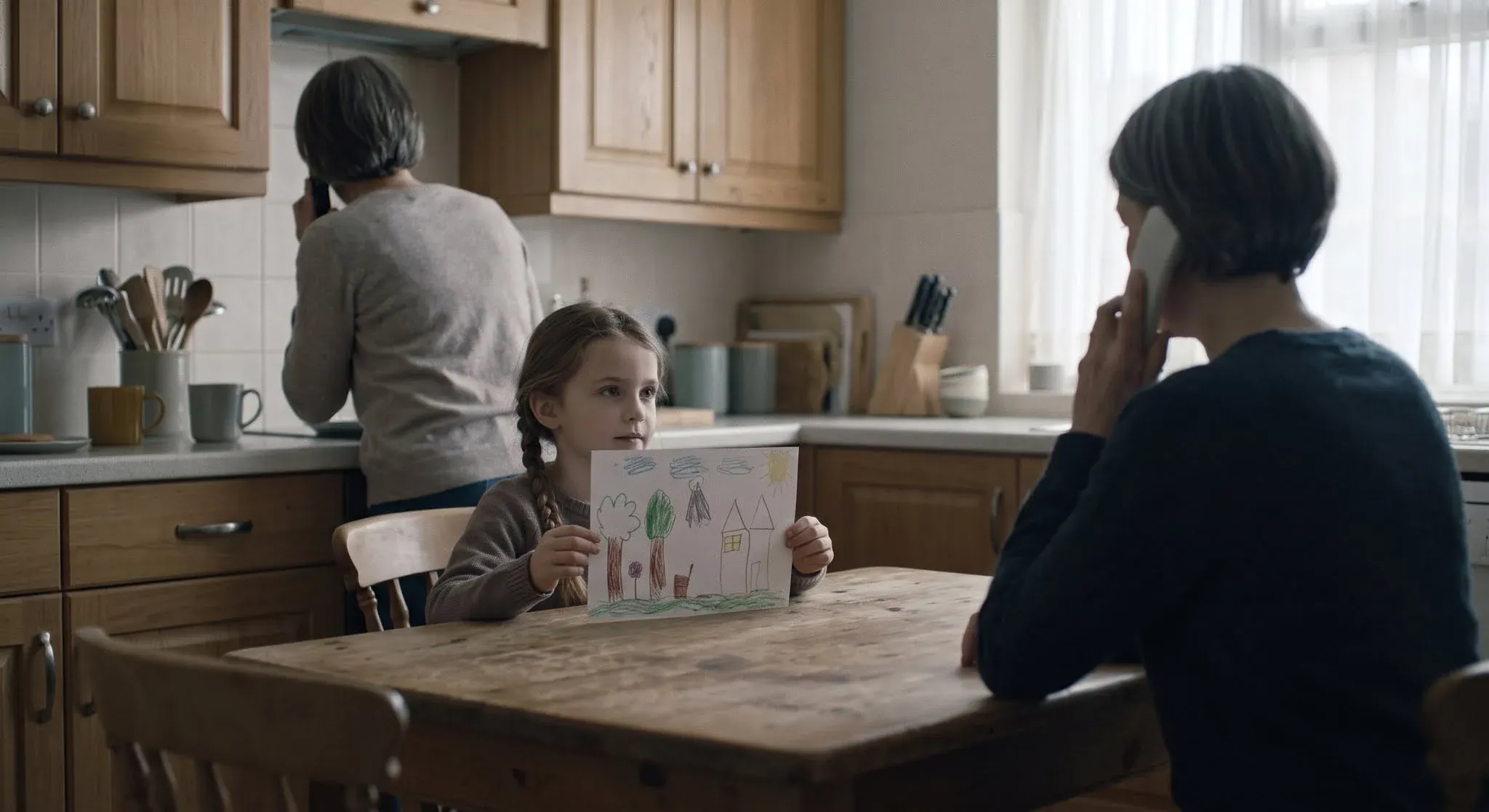
The research does not use Gibson’s term, but it has studied the underlying behaviour for decades.
A landmark 1998 review looked at how parents react to children’s feelings. Negative reactions went with more negative emotion and weaker social skills in children.
The authors were careful. Most studies were correlational, and influence runs both ways between parent and child.
A 2024 meta-analysis of 49 studies with more than 24,000 young people found one mechanism. Unsupportive responses to feelings, psychological control and family conflict were all linked to anxiety and depression. The link ran through the child’s ability to regulate emotion. In other words, the damage runs through the skill the child never got to learn.
At the more severe end, emotional neglect has serious long-term effects. A meta-analysis of 124 studies found neglect roughly doubled the odds of later depressive disorders. A second meta-analysis found psychological abuse and neglect were more strongly linked to depression than sexual abuse was.
Not every emotionally immature parent is neglectful. But it is a spectrum, and the quiet end of it is not harmless. Childhood emotional neglect covers that end and its signs in adults.
How does it show up in adult children?
- Emotional inhibition: You hold feelings in, downplay them or do not notice them until they overflow.
- Hyper-responsibility: Other people’s moods feel like your job to fix.
- People pleasing: Keeping everyone happy became the safest strategy.
- Self-doubt: You second-guess your perceptions, because they were so often contradicted.
- Loneliness in relationships: You are good at giving care and uncomfortable receiving it.
- Attraction to familiar dynamics: Partners who are warm one day and unavailable the next can feel like home.
The first of these has direct research behind it. A study of 127 adults found that childhood emotional invalidation, meaning punishment, minimising or distress in response to a child’s feelings, was linked to chronic emotional inhibition in adulthood. That inhibition, in turn, predicted depression and anxiety.
The authors noted something important. Holding feelings in was probably functional in childhood, because it reduced the parent’s distress and rejection. The problem is carrying a childhood survival strategy into an adult life that no longer needs it.
Are my parents emotionally immature, or am I overreacting?
This is one of the most common questions, and asking it is itself part of the pattern. Children of emotionally immature parents are often trained to doubt their own experience.
A few honest tests:
- Could you bring your feelings to them as a child and expect help? Not every time, but usually.
- Can you bring them now? Try imagining sharing something vulnerable. Notice what your body predicts.
- Were ruptures ever repaired? Healthy families argue. They also come back and talk about it.
- Who looked after whom?
No parent is perfectly attuned. The question is the overall pattern, not the worst days.
How do you deal with an emotionally immature parent?

- Drop the hope they will become who you needed. This is the hardest step and the most freeing. Gibson calls it giving up the healing fantasy.
- Observe instead of engaging. When they react, watch the pattern rather than trying to win the conversation. Curiosity lowers the temperature.
- Decide what you share. Keep vulnerable things for people who can hold them. That is not deception. It is matching disclosure to capacity.
- Keep interactions short and structured. Visits with an end time, phone calls with a natural exit, a clear plan for holidays.
- Set boundaries without expecting understanding. State them once, calmly, then act on them. Boundaries with a narcissist covers the practical side, and much of it applies here too.
- Grieve what you did not get. The loss is real even if the childhood looked fine.
- Consider distance if contact keeps harming you. Some people reduce contact. Some stop entirely. Family estrangement covers what the research says about that choice.
Can you break the cycle with your own children?
Yes. The research here is encouraging.
A meta-analysis of 15 randomised trials tested parenting programs focused on emotions. Parents got better at responding to their children’s feelings, and the children’s emotional competence improved. These are learnable skills, not fixed traits.
If you are asking “am I an emotionally immature parent?”, that question is a good sign. The parents who cause the most harm rarely ask it.
The core skills are simple to describe and hard to practise: notice the child’s feeling, name it, stay steady yourself, and repair after you get it wrong.
Common questions
What is the book about emotionally immature parents? Adult Children of Emotionally Immature Parents by Lindsay C. Gibson, published in 2015. Her follow-up, Recovering from Emotionally Immature Parents, came out in 2019.
Can emotionally immature parents change? Some grow over time, especially if they seek help. Most do not change much in response to their adult child’s requests. It is safer to plan around who they are.
Is having emotionally immature parents a form of trauma? It can be. The research links emotional neglect and invalidation to lasting effects, especially on emotion regulation. Whether you call it trauma matters less than taking the effects seriously.
What phrases do emotionally immature parents use? Common ones include “you’re too sensitive”, “after everything I’ve done for you”, “that never happened”, “why are you making this about you” and “I was a much better parent than mine.”
Why do I feel guilty setting boundaries with them? Because as a child, keeping them comfortable felt like survival. Guilt tripping covers how that guilt gets used, and how to hold a line anyway.
Is this related to enmeshment? Sometimes. An emotionally immature parent who leans on a child for comfort can create enmeshment, where the boundaries between parent and child dissolve.
What to take from this
Emotionally immature parents usually did not set out to hurt you. That does not make the effects less real.
You learned to live without emotional support because you had to. Much of adult recovery is learning that you are allowed to need it now, and that other people can provide it.
Understanding your parent’s limits is not the same as excusing them. It is simply seeing them clearly, which is what you deserved from them all along.
Where to go next. Inner child covers the self-compassion work that repairs some of what was missing. Self-abandonment covers the habit of putting yourself last that often grows from this kind of childhood.
If your parent’s pattern goes beyond immaturity, the narcissistic mother and the family scapegoat cover what that looks like.
If you want structured support untangling this, the 8 week narcissistic abuse recovery program starts with a free fit call.
Coaching is not therapy and is not a substitute for medical or psychiatric care. If you are in crisis, please use the support resources on this site or contact your local emergency services.