Childhood Emotional Neglect: Signs in Adults
Childhood emotional neglect is the trauma of what did not happen. What it is, the signs in adults, what the research shows, and how to heal from it.
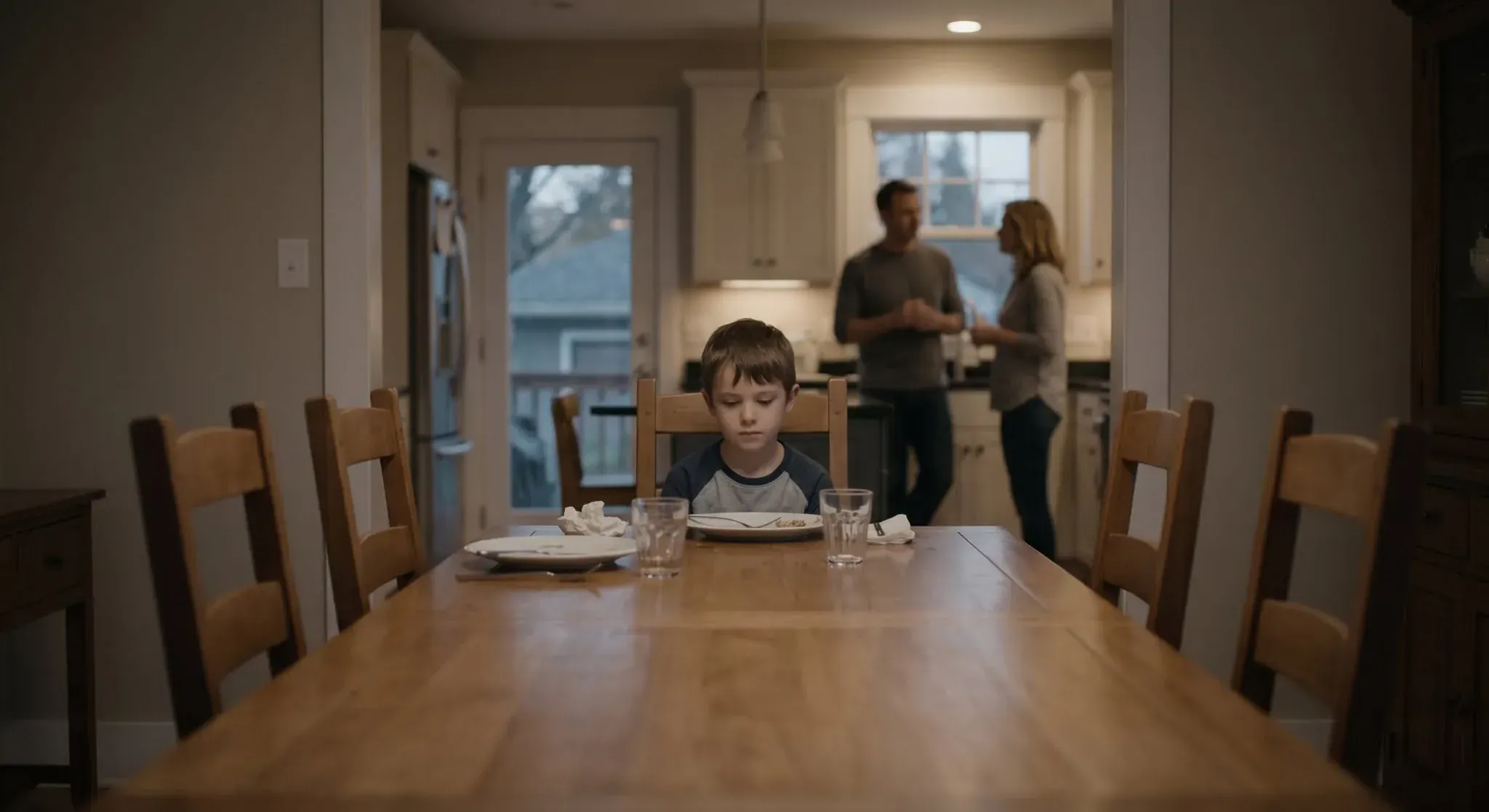
Nobody hit you. There was food on the table and a roof over your head. You might even describe your childhood as fine.
And yet you struggle to say what you feel. You handle everything alone. Something seems to be missing, and you cannot point to what it is.
That is how childhood emotional neglect works. It is defined by what did not happen, so there is no memory to point to. There is only the gap.
What is childhood emotional neglect?
Childhood emotional neglect is a parent’s failure to notice, respond to, or support a child’s feelings often enough. The child’s physical needs may be fully met. What is missing is attention to their inner life: comfort when upset, interest in what they feel, and help learning to name it.
The psychologist Jonice Webb brought the idea to a wide audience in her 2012 book Running on Empty, and she uses the short form CEN.
The research uses the same concept. Emotional neglect is one of the five standard types of childhood maltreatment that researchers measure, alongside emotional, physical and sexual abuse and physical neglect.
Is emotional neglect a form of trauma?
Yes, though not in the way most people picture trauma.
Abuse is something done to you. Neglect is something withheld. The harm comes from absence, repeated thousands of times, rather than from one terrible event.
That makes it hard to see. You cannot remember a moment when your feelings were not noticed, any more than you can remember a moment when the air was thin. You only notice later that you never learned to breathe properly.
It is also common. A 2013 meta-analysis of 16 samples with nearly 60,000 people estimated that about 18% of people experienced emotional neglect in childhood. There was no clear difference between men and women.
The same authors described neglect as a “neglected” type of maltreatment in research. It is studied far less than abuse, even though it is about as common.
What does childhood emotional neglect look like?
From the outside, often like nothing. Here are common examples:
- Your feelings were not asked about: nobody wanted to know how your day really was.
- Distress was met with distraction: crying was fixed with a snack or a screen, never with “what’s wrong?”
- Feelings were treated as a problem: “Stop being so sensitive” or “You’re fine” ended the conversation.
- Achievements got attention, feelings did not: your grades were noticed, your fear was not.
- A parent was present but absent: working constantly, depressed, drinking, or simply not interested.
- You were the easy one: you learned early that needing nothing kept the household calm.
Neglect is often unintentional. Many emotionally neglectful parents were neglected themselves. They could not give what they never received. That explains it. It does not undo the effect.
If your parent was more than absent, if they were demanding, controlling or dismissive in a pattern, emotionally immature parents and narcissistic parents cover those profiles.
What are the signs of childhood emotional neglect in adults?
These are the signs adults most often recognise. No single sign proves anything. A cluster of them is worth taking seriously.
- You struggle to name what you feel: asked how you feel, you say “fine,” “tired” or “I don’t know.”
- You feel empty or numb: not sad exactly, but hollow, as if something is missing.
- You handle everything alone: asking for help feels unnatural.
- You feel different from other people: as if everyone else got a manual you did not.
- You are hard on yourself: you have plenty of compassion for others and very little for yourself.
- You feel guilty for having needs: wanting something feels selfish.
- Close relationships feel confusing: you are not sure what to give, what to ask for, or how close is too close.
- You struggle with self-discipline in odd places: you can work hard for others, but find it hard to look after yourself.

What does the research show?
The research on emotional neglect is strong, and three findings matter most for adults.
Neglect is linked to depression
A 2012 meta-analysis of 124 studies found that childhood neglect roughly doubled the odds of later depressive disorders.
A 2016 meta-analysis went further. Among the types of maltreatment it compared, psychological abuse and neglect were the most strongly linked to depression. They were more strongly linked than sexual abuse.
That surprises people. It makes sense once you see that neglect, like emotional abuse, shapes how you see yourself every single day.
Neglect is linked to not knowing your own feelings
The inability to identify your own emotions has a name: alexithymia.
A 2022 meta-analysis of 88 studies with more than 43,000 people found that childhood maltreatment was linked to higher alexithymia. Neglect was more strongly linked to it than physical or sexual abuse.
The effects were small, so not everyone who was neglected has alexithymia. But the pattern fits what neglected adults say: “I don’t know what I feel” is not avoidance. It may be a skill that was never taught.
Invalidation teaches you to hold feelings in
A study of 127 adults found that childhood emotional invalidation was linked to emotional inhibition in adulthood. Invalidation here meant punishment, minimising or distress in response to a child’s feelings.
Emotional inhibition was in turn linked to distress. In plain terms, children whose feelings were dismissed learned to keep them hidden, and hiding them had a cost.
How is emotional neglect different from emotional abuse?
The two often overlap, and the research measures them separately.
| Emotional abuse | Emotional neglect | |
|---|---|---|
| What happens | Something harmful is done | Something needed is not given |
| Examples | Insults, threats, humiliation, contempt | Ignoring feelings, no comfort, no interest |
| How you remember it | Specific painful moments | A vague sense that something was missing |
| Common adult result | Shame, fear, a harsh inner critic | Emptiness, confusion about feelings, self-reliance |
Emotional abuse covers the active form in adult relationships, and verbal abuse covers the spoken kind.
Many people experienced both. A parent who was cold most of the time and cruel some of the time is not rare.
Why does childhood emotional neglect lead to abusive relationships?
There is no research proving it causes them. There are good reasons it can make them harder to spot.
If attention was scarce, intense attention feels like love. The love bombing at the start of a narcissistic relationship can feel like being seen for the first time.
If your feelings never mattered, being dismissed feels normal. A partner who ignores your needs does not set off alarms. It feels like home.
If you learned to need nothing, you ask for very little. That makes you easy to take from.
None of this is a fault in you. It is what anyone would learn in that environment. It is also why recovery from a narcissistic relationship often leads back to the childhood, and why inner child work comes up so often.
Is there a childhood emotional neglect test?
Jonice Webb publishes a free Emotional Neglect Questionnaire on her website. It is a useful starting point for reflection. It is not a validated research or diagnostic tool.
Researchers usually measure emotional neglect with the Childhood Trauma Questionnaire, which has an emotional neglect subscale. A therapist can use it with you if you want a more formal picture.
A simpler test: try to remember a time a parent asked how you felt and really listened to the answer. If nothing comes to mind, that is information.
How do you heal from childhood emotional neglect?
You learn, as an adult, what you were not taught as a child. That is slower than it sounds and more possible than it feels.
- Learn to name your feelings: use a feelings list. Several times a day, stop and pick one word. “Irritated” is more useful than “fine.”
- Notice your body first: feelings often show up as tightness, heaviness or restlessness before they have a name.
- Treat your needs as information: a need is not a demand. Hunger, tiredness, loneliness and wanting comfort are signals, not flaws.
- Practise self-compassion: ask what you would say to a friend in your position, then say it to yourself.
- Let one person in a little further: share one real feeling with someone safe, and notice that the relationship survives.
- Get support if it runs deep: therapy is especially useful when neglect sits alongside depression, numbness or relationship patterns that keep repeating.
Healing does not require your parents to admit anything. Many never will. It requires you to start giving yourself the attention you did not get.
If old feelings arrive suddenly and overwhelm you, that may be an emotional flashback. If you ever feel unsafe or think about harming yourself, crisis support lists where to get help right now.

Common questions
Can you have childhood emotional neglect with good parents? Yes. Parents can be loving, hardworking and well-meaning and still miss their children’s feelings, especially if nobody attended to theirs. Neglect describes what was missing, not whether your parents were good people.
What is unloved daughter syndrome? It is a popular term, not a clinical one, for women who grew up with a mother who was cold, critical or emotionally absent. It overlaps heavily with emotional neglect. Narcissistic mothers covers the version with active criticism.
Can childhood emotional neglect affect a marriage? Often. People who grew up emotionally neglected may struggle to say what they need, or may not notice when their partner is reaching out. Both are learnable.
How common is childhood emotional neglect? About 18% of people, based on a large meta-analysis. It is one of the most common forms of childhood maltreatment.
Is it possible to fully heal? Most people improve substantially. The feelings you learn to name later can become as available as anyone else’s, though stress may bring the old blankness back for a while.
What to take from this
Childhood emotional neglect is real, common and measurable, even though it leaves no single memory behind.
The research links it to depression and, more strongly than physical or sexual abuse, to not knowing your own feelings. That is not a personal failing. It is a gap in what you were taught.
You cannot go back and get the attention you missed. You can start paying it to yourself now, and that is where it begins.
Where to go next. Emotionally immature parents covers the parents who most often produce this pattern.
Self-abandonment covers what years of overlooking your own needs does in adulthood, and inner child covers the research behind reparenting work.
If you want structured support, narcissistic abuse recovery coaching works with exactly these childhood patterns.
Coaching is not therapy and is not a substitute for medical or psychiatric care. If you are in crisis, please use the support resources on this site or contact your local emergency services.