Hypervigilance: Why You Still Scan the Room
Hypervigilance is a nervous system stuck on watch. The signs, why it follows abuse, what the research really shows about threat and attention, and what helps.
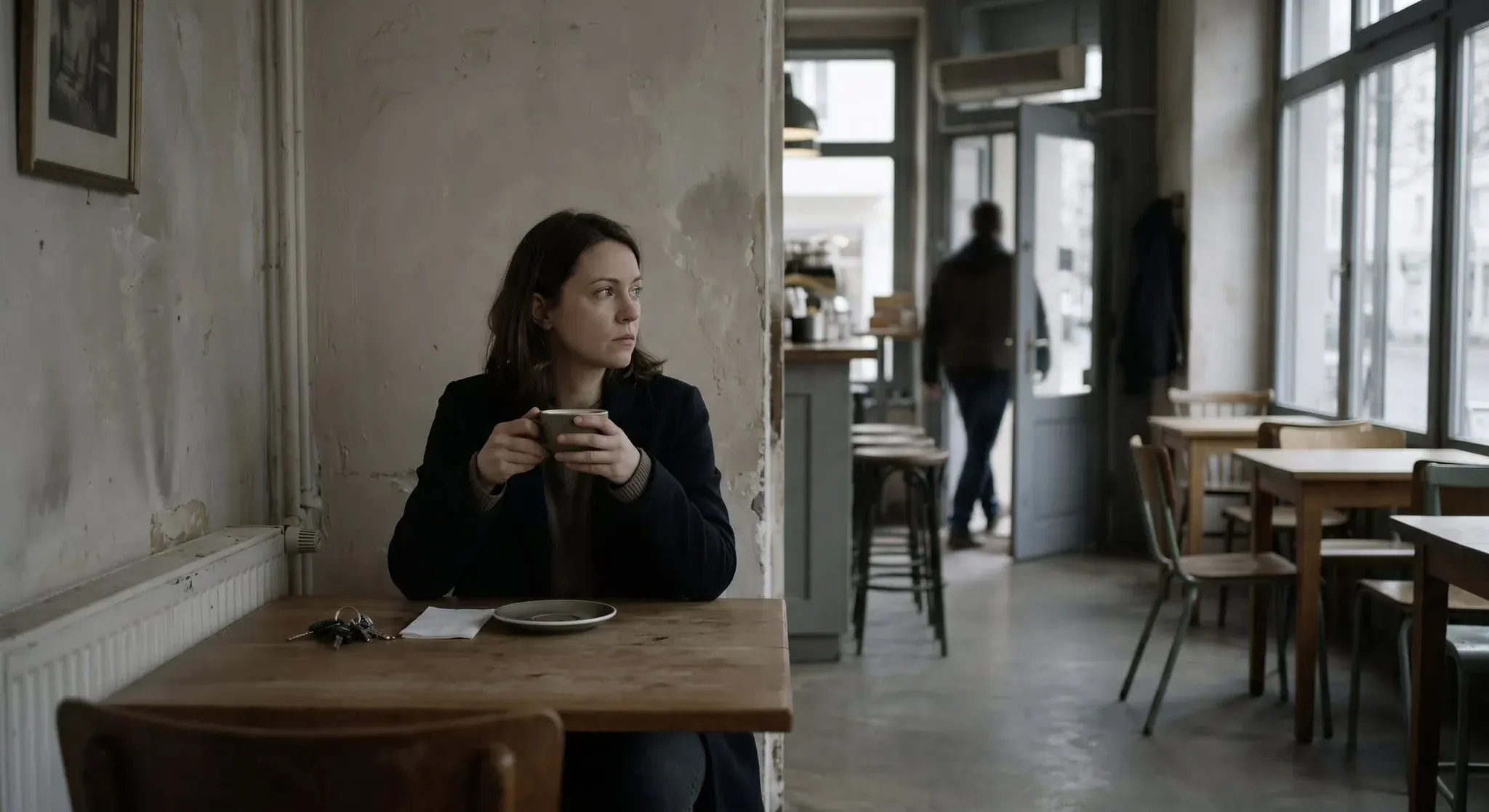
You sit with your back to the wall. You know where the exits are before you know what you are ordering.
You can hear a key in the door and tell, from the sound alone, what kind of evening it will be. You left that relationship a long time ago. Your body did not get the message.
That is hypervigilance. It is not paranoia, and it is not a personality flaw.
What is hypervigilance?
Hypervigilance is a state of constant alertness to danger. The nervous system keeps scanning for threat even when none is present. It shows up as watching faces and moods, tracking exits and noises, startling easily, and struggling to relax or sleep.
It is a symptom, not a diagnosis. It appears in post-traumatic stress, in complex PTSD and in anxiety disorders, and it is common after living with someone unpredictable.
The scanning once had a job. In a home or a relationship where danger arrived without warning, noticing early was how you stayed safe. The problem is that the setting stayed switched on.
What are the signs of hypervigilance?
- Scanning: You check rooms, exits and faces without deciding to.
- Mood reading: You can tell someone’s state from a footstep, a sigh or the length of a text.
- Startling easily: A dropped pan or a door closing makes you jump out of all proportion.
- Bracing: Your shoulders, jaw or stomach are tight most of the time.
- Overpreparing: You rehearse conversations and plan for every way a day could go wrong.
- Poor sleep: You wake at small noises, or lie awake listening.
- Exhaustion: You are tired in a way rest does not fix, because watching never stops.
Why does hypervigilance happen after narcissistic abuse?
Because the danger in those relationships was hard to predict. Moods turned on a word. Affection and punishment came from the same person, sometimes in the same hour.
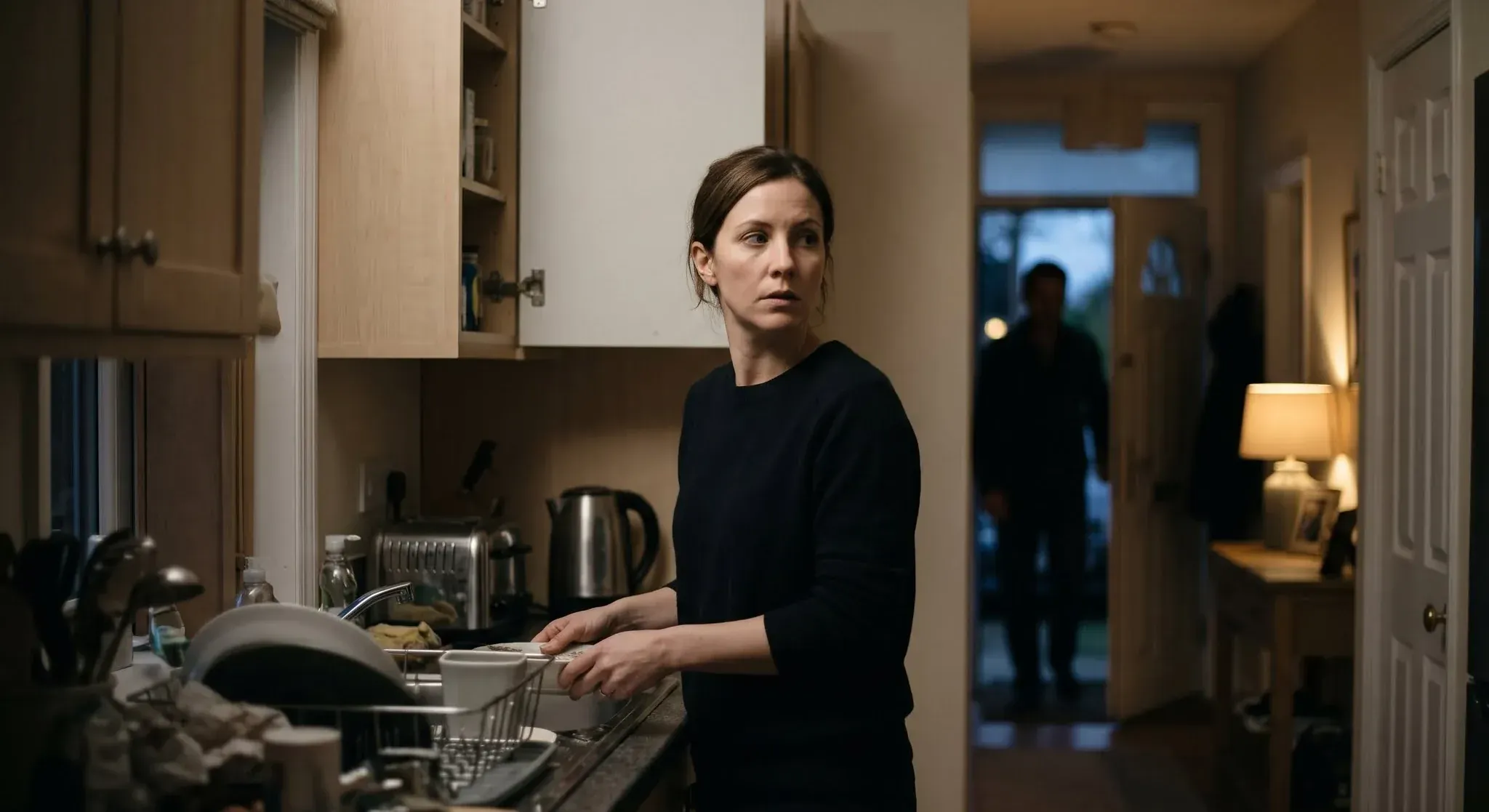
When threat is unpredictable, the only defence is constant monitoring. You were not imagining danger. You were tracking a real person whose reactions you could not forecast.
There is research that fits this from childhood too. A 2002 study found that physically abused children identified angry faces from less visual information than other children did.
The authors read that as perceptual learning. Children who live with hostility get faster at spotting it, because spotting it early protects them.
It is a small study of children, and it cannot speak for every adult survivor. It does show that the watching is learned, not invented.
What is emotional hypervigilance?
Emotional hypervigilance is the version aimed at people, not places. You are not watching the door. You are watching a face.
It looks like reading every pause in a conversation, scanning a partner’s tone for the first sign of irritation, and adjusting yourself before anyone asks. Many survivors describe it as knowing someone’s mood before they do.
It often travels with the fawn response, the habit of appeasing a threat to keep it calm. The scanning finds the danger. The fawning tries to defuse it.
What does the research actually show?
The popular picture of hypervigilance is someone who spots danger faster than everyone else. The research is more specific than that.
A systematic review of eye-tracking studies in PTSD pooled 11 studies and 456 people. It found little support for faster threat detection.
What it did find, consistently, was sustained attention on threat. People with PTSD were not quicker to look at threatening images. They found it harder to look away once they had.
That matches how it feels from the inside. You do not just notice the raised voice. You cannot stop listening to it.
The body side is well documented. A 2007 meta-analysis of psychophysiology in PTSD found raised heart rate at rest, stronger reactions to startling sounds, and slower settling afterwards.
The effects were small to moderate. The authors noted that the studies leaned on male veterans, so the picture for survivors of relationship abuse is less complete.
That gap is starting to close. A 2023 study of women who had survived intimate partner violence found that how they processed threat was tied to how their stress hormones responded. Those who steered attention away from threat had a blunted cortisol response.
The takeaway is not that survivors are broken. It is that years of threat change how attention and the stress system are tuned, in more than one direction.
Is hypervigilance the same as anxiety or PTSD?
Not exactly. Hypervigilance is one symptom, and several conditions share it.
- PTSD and complex PTSD: Hypervigilance is part of the sense of current threat in both. In complex PTSD it comes with deeper changes in how you see yourself and other people.
- Anxiety disorders: Generalised anxiety keeps the system on alert as well, often without one clear source.
- After abuse without a diagnosis: Many people carry hypervigilance without meeting the criteria for anything. It is still real, and it still deserves attention.
Only a qualified clinician can tell you which, if any, applies. Emotional flashbacks covers a related symptom that often comes with it.
Is hypervigilance the same as intuition?
They feel similar, and they are not the same thing.
Intuition is quiet and specific. It notices something real about this person in this situation. Hypervigilance is loud and general. It treats every raised voice like the one you used to live with.
A rough test is whether the alarm updates. Intuition settles when the evidence says you are safe. Hypervigilance keeps ringing, because it was built for a place you no longer live in.
How do you stop being hypervigilant?
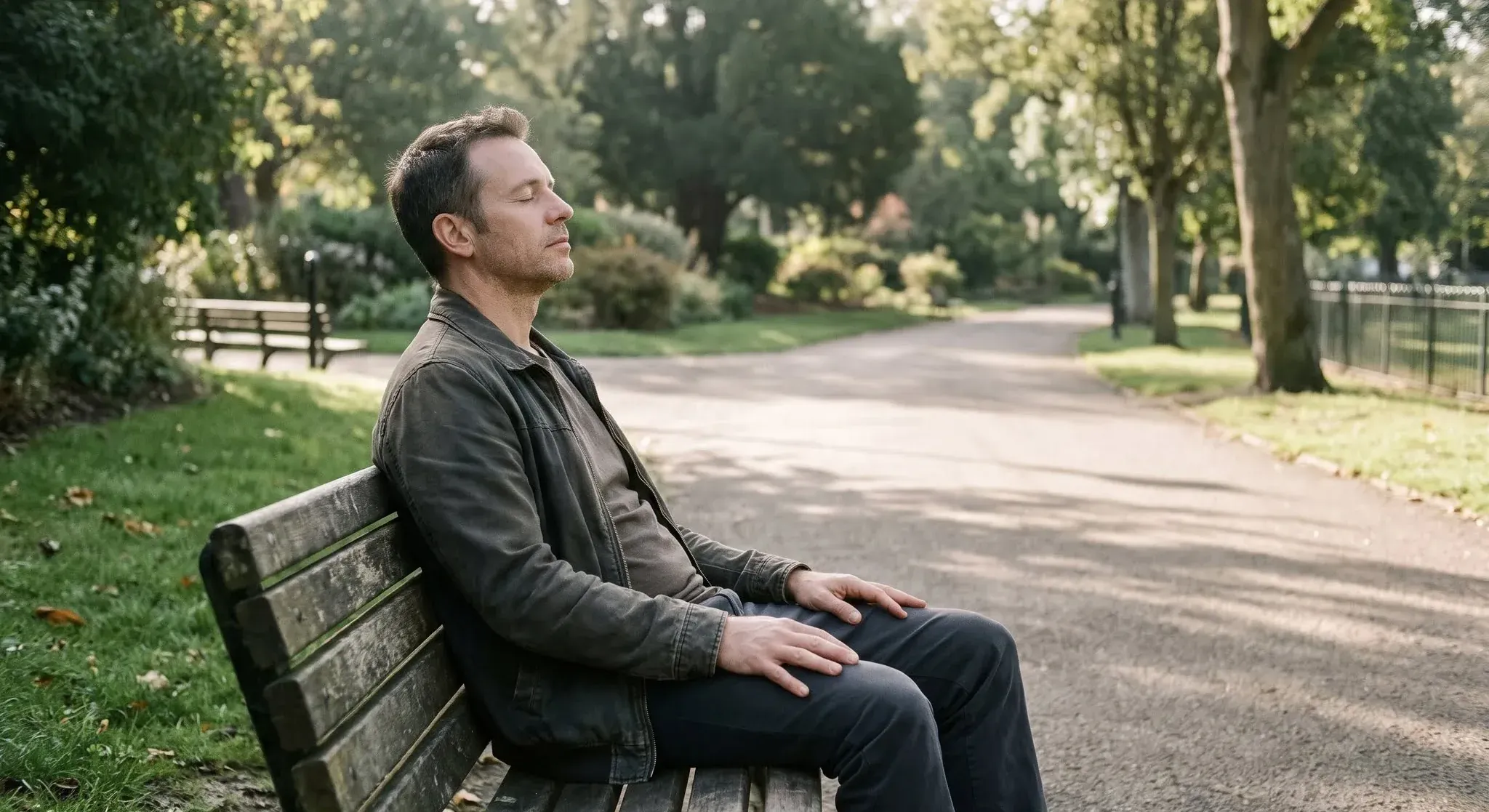
You do not switch it off by deciding to. You teach the nervous system, slowly, that the danger is over.
- Name it when it fires: “That is the old watch, not the present.” Naming it puts a small gap between the alarm and your reaction.
- Orient on purpose: Look around slowly and name what you can see. You are giving the system the evidence it is scanning for.
- Lengthen the out-breath: Slow breathing with a longer exhale is one of the best-supported ways to bring arousal down. Nervous system regulation covers the breathing evidence.
- Choose predictable people: Safety is learned from experience. Consistent relationships do more over time than any technique.
- Protect sleep: A tired system is a jumpier system.
- Get trauma-focused help if it is heavy: A 2019 meta-analysis of 51 trials found that trauma-focused therapies, including CBT and EMDR, reduced complex PTSD symptoms.
Coaching is not therapy. If hypervigilance comes with flashbacks, panic or sleeplessness that is wearing you down, a trauma-informed therapist is the right first step. Coaching vs therapy covers the difference.
Common questions
Is hypervigilance a mental illness? No. It is a symptom that appears in several conditions, including PTSD and anxiety disorders. On its own it is not a diagnosis.
Can hypervigilance be permanent? It tends to ease as life becomes safer and steadier, especially with support. Many people keep some extra alertness and lose the constant exhaustion.
Is there a hypervigilance test? There is no single validated test for hypervigilance alone. Clinicians assess it as part of PTSD and anxiety screening.
Is hypervigilance linked to autism? Some autistic people describe heightened sensory alertness, which can look similar. It is a different mechanism, and a qualified assessment is the only way to tell them apart.
Why am I hypervigilant even though I am safe now? Because the nervous system learns from repetition, not from facts. It needs time and many safe experiences before it believes the danger is over.
What to take from this
Hypervigilance is a nervous system that learned to keep watch, because once it had to.
The research is clear that trauma changes attention and the body’s stress response, and honest about how much is still unknown. What it does not show is that the change is fixed.
You do not have to stop noticing things. You only need the watch to stand down when there is nothing left to guard.
Where to go next. Narcissistic abuse and the nervous system covers what long-term threat does to the body.
Trauma responses covers fight, flight, freeze and fawn, the reactions hypervigilance is watching out for.
How to trust again covers rebuilding safety with people, and anxious attachment covers the relationship version of the same alarm.
If you want structured support settling a system that is still on guard, the 8 week narcissistic abuse recovery program is built for the aftermath.
Coaching is not therapy and is not a substitute for medical or psychiatric care. If you are in crisis, please use the support resources on this site or contact your local emergency services.