What Abuse Does to Your Body
Sustained abuse leaves measurable biological traces. What the evidence shows about inflammation, stress hormones and long-term health, without the mysticism.
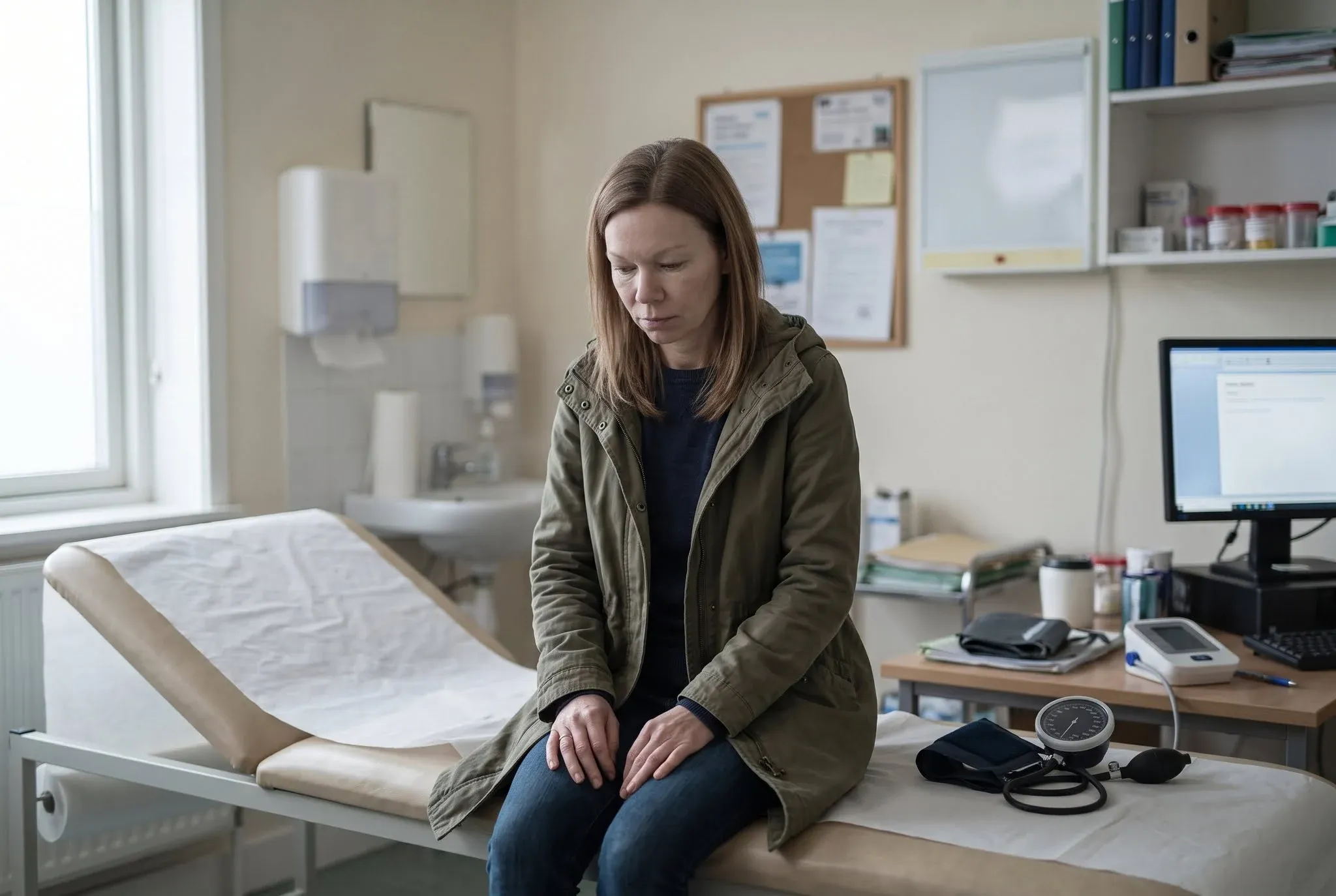
You went to the doctor and everything came back normal. You are still exhausted, still aching, still not sleeping.
Somewhere along the way you read that trauma is stored in the body, and it sounded true because something clearly is.
That phrase is doing a lot of work it cannot support, and the real evidence is better than the metaphor. Sustained abuse leaves biological traces that have been measured in hundreds of thousands of people.
Is trauma stored in the body?
Not in the way the phrase implies, and yes in a way that matters more.
What is not established: that specific memories or experiences are held in particular tissues, that emotions live in your hips or your jaw, or that a practitioner can release them by pressing on the right place.
Those claims are popular and they are not supported. Nobody has demonstrated a mechanism by which a shoulder holds an event.
What is established is that sustained stress changes measurable things about your body, and those changes persist long after the situation ends.
That is a stronger claim, not a weaker one. It is testable, it has been tested, and it does not require anyone to believe anything unusual about anatomy.
The rest of this page is what has actually been found.
What does the long-term evidence show?
The largest picture comes from research on adverse childhood experiences, which covers abuse, neglect and household dysfunction including exposure to domestic violence.
A systematic review and meta-analysis in Lancet Public Health pooled 37 studies covering 253,719 participants.
It compared people reporting four or more adverse experiences against people reporting none. Every health outcome measured showed elevated risk.
The size varied in a way worth reading carefully:
- Weak to modest, odds ratios under two, for physical inactivity, obesity and diabetes.
- Moderate, odds ratios of two to three, for smoking, heavy drinking, poor self-rated health, cancer, heart disease and respiratory disease.
- Strong, three to six, for mental ill health and problematic alcohol use.
- Strongest, above seven, for problematic drug use and interpersonal violence.
Heart disease and cancer at two to three times the odds is not a metaphor about stored emotion. It is a public health finding.
Two honest limits. The authors identified considerable heterogeneity between estimates for almost half the outcomes, and this is observational research, so it establishes association rather than proof of cause.
It also measures childhood adversity specifically. Adult abuse is less studied at this scale.
What is the mechanism?

Two systems carry most of the explanation, and neither of them is mystical.
Inflammation
A meta-analysis in Molecular Psychiatry examined whether early adversity leaves a pro-inflammatory signature in adults.
It pooled 18 studies covering 16,870 individuals for C-reactive protein, 15 studies for interleukin-6, and 10 for tumour necrosis factor alpha.
People exposed to childhood trauma had significantly elevated baseline levels of all three inflammatory markers.
The effects were small, and I would rather say that than let you infer something larger. But they were consistent across three separate markers and thousands of people, and chronic low-grade inflammation is a recognised contributor to exactly the conditions the Lancet review found elevated.
That is a plausible route from what happened to you to your cardiovascular risk. It is not the only one.
Stress hormones and cumulative load
The other half is the stress response itself, and the useful concept is allostatic load: the cumulative cost of a system that keeps adapting to demand.
A review of cortisol as a chronic stress marker sets out both the idea and its measurement problem.
Acute stress produces an adaptive response. Chronic, excessive stress produces cumulative negative effects on health through allostatic load.
The measurement problem is worth knowing about, because it is why nobody can test you for this.
Blood and saliva cortisol capture a single moment, and cortisol swings across the day, so a single reading tells you very little about long-term exposure. Hair analysis is more promising for retrospective assessment, because hair grows about a centimetre a month.
So the mechanism is real and the everyday test does not exist. Anyone offering to measure your trauma load from one sample is overselling.
What does this look like day to day?
The research above is about populations. What people describe is more specific.

- Sleep that does not restore. Falling asleep fine and waking at the same hour, or sleeping nine hours and waking tired.
- Being tired and wired at once. Exhausted, and unable to settle.
- Gut symptoms that track stress rather than food.
- Pain without a clear cause. Jaw, neck, shoulders, lower back.
- Getting ill more often, or taking longer to recover.
- A startle response that has not stood down. Doors, raised voices, a phone lighting up.
- Appetite that has stopped making sense, in either direction.
Every one of those has other explanations. That is not a hedge, it is the most useful sentence on this page.
Get it checked properly
This is where writing like mine can do harm, so I will be blunt about it.
Thyroid disease, anaemia, sleep apnoea, coeliac disease, diabetes, perimenopause, vitamin B12 and D deficiency and several autoimmune conditions all produce fatigue, aches, fog and poor sleep.
Attributing your symptoms to trauma is how a treatable condition goes unfound for years. People in this situation are especially prone to it, because a psychological explanation is available and feels like insight.
Do both. Get bloods done and tell the doctor about the abuse, because both are relevant and only one of them is something you can diagnose yourself.
The Lancet data is a reason to take your physical health more seriously, not less. Elevated cardiovascular risk is a reason to have your blood pressure checked, not a reason to accept feeling unwell.
If you want the symptom-and-diagnosis side of this rather than the long-term physiology, narcissistic abuse syndrome covers what is and is not a clinical category.
Does the damage reverse?
Partly, and the honest answer has more give in it than either the pessimists or the sellers suggest.
Allostatic load is cumulative rather than permanent. Remove the demand and the system is no longer adding to it, which is the single largest thing available to you.
Inflammation responds to sleep, movement, and not living under threat. None of that is exotic and all of it is slow.
What has the best evidence in this specific area is unglamorous. Slow breathing has a 223-study meta-analysis behind it, covered in nervous system regulation, and it measurably shifts parasympathetic activity.
What does not have evidence is the release industry. No credible research supports the idea that a session of anything discharges stored trauma from tissue, and the confident timelines attached to those offers are marketing.
The realistic frame is convalescence, not repair. Your body spent years at a level of readiness it was not designed to sustain, and it stands down at its own pace once the demand stops.
Common questions
Can trauma cause physical illness? The evidence supports elevated risk rather than direct causation. Four or more adverse childhood experiences was associated with two to three times the odds of heart disease, cancer and respiratory disease.
Is trauma really stored in the body? Not as memory in tissue. As measurable changes to inflammatory markers, stress hormones and autonomic activity, yes.
Can I get tested for this? Not usefully. Single cortisol readings vary too much across the day to represent long-term exposure, and inflammatory markers are non-specific.
Does somatic therapy release stored trauma? There is no evidence for release from tissue. Some somatic approaches may help through ordinary routes like attention, breathing and safe contact.
Why do I get ill more since leaving? Commonly reported, and plausible given the inflammation findings. It is also when people finally stop running on adrenaline. Get anything persistent checked.
How long does the body take to settle? Longer than people expect, and it is not linear. Sleep tends to improve first and pain last.
What to take from this
The phrase you found was reaching for something true and describing it badly.
Trauma is not stored in your shoulder. It is registered in your immune system, your stress hormones and your heart. Those are measurable, they have been measured in hundreds of thousands of people, and the findings are more serious than the metaphor.
Take that seriously in the direction that helps. Get the physical symptoms investigated rather than explained. Treat elevated cardiovascular risk as a reason for a blood pressure check.
And treat anyone who offers to release it from your body in six sessions as someone selling you the metaphor.
Where to go next. Narcissistic abuse syndrome covers the symptoms and the diagnosis question, and nervous system regulation covers what actually has evidence behind it.
Dorsal vagal shutdown covers the collapse state specifically, and the fawn response covers appeasement.
Where this began in childhood, the narcissistic mother and narcissistic parents cover the source.
If you want structured support, the 8 week narcissistic abuse recovery program works alongside medical care rather than instead of it. If there is any question of danger, start with crisis support.
Coaching is not therapy and is not a substitute for medical or psychiatric care. If you are in crisis, please use the support resources on this site or contact your local emergency services.