Narcissistic Mother: Signs and What to Do
A narcissistic mother treats you as an extension of herself. The signs, what the research actually shows about the damage, and how to decide about contact.
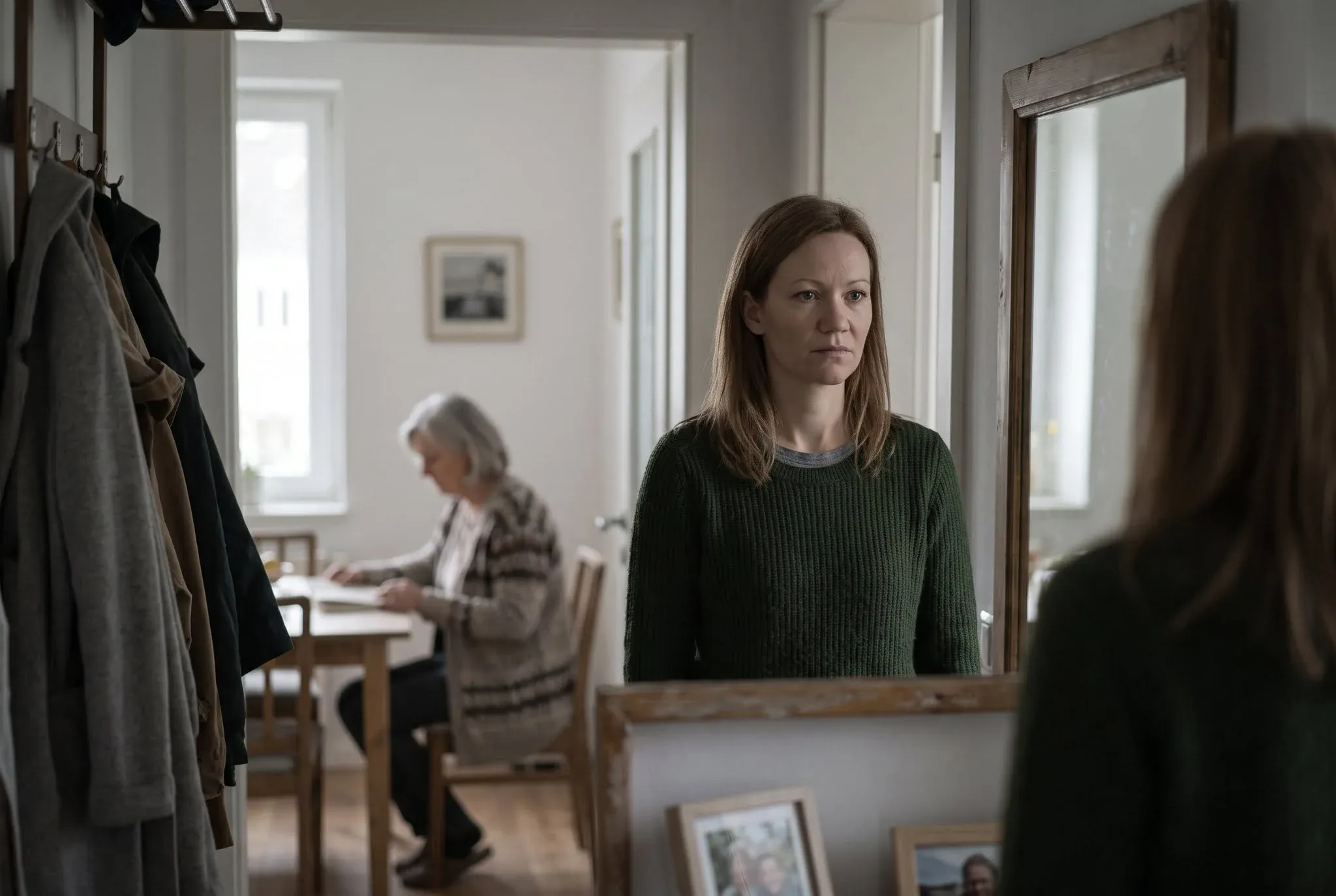
A narcissistic mother relates to her child as a reflection rather than a person. Your achievements are hers. Your feelings are an inconvenience or a threat.
Most people who search this term are not looking for a diagnosis. They are looking for permission to stop explaining.
The hardest part is that she is not a stranger you can walk away from. She is the person who taught you what love costs, and the one everyone expects you to keep forgiving.
What is a narcissistic mother?
It describes a pattern of parenting, not a diagnosis you can make from a website.
The core feature is that your separateness is not tolerated. You are permitted to have opinions and needs when they match hers, and treated as disloyal when they do not.
That shows up in ordinary moments rather than dramatic ones. A promotion she turns into a story about herself. A boundary she treats as an attack.
Is she actually a narcissist?
Worth asking honestly, because the answer is usually no in the clinical sense, and that changes nothing about your experience.
A systematic review of community prevalence studies found narcissistic personality disorder in an average of 1.06% of adults, across seven studies using structured interviews.
The range ran from 0% to 6.2%, which tells you how much the estimate depends on method. Whatever the true figure, it is small.
So the odds are that your mother does not have a diagnosable disorder. She may simply be a person who behaves this way, which is not a lesser problem.
The label is not the point. You do not need a diagnosis to describe what happened to you, and you will never get one, because she is not the one in the room asking.
The same review looked for controlled treatment trials and found none that met its criteria. That was up to 2008, so it is not current evidence of nothing existing since.
It does explain why “she needs therapy” so rarely goes anywhere. There is no established treatment protocol waiting for her to walk in.
If “toxic mother” feels like the more honest description, use it. It names the same behaviour without claiming a diagnosis, and the advice on this page applies either way.
If she was limited rather than exploitative, emotionally immature parents may describe her better.
What are the signs of a narcissistic mother?
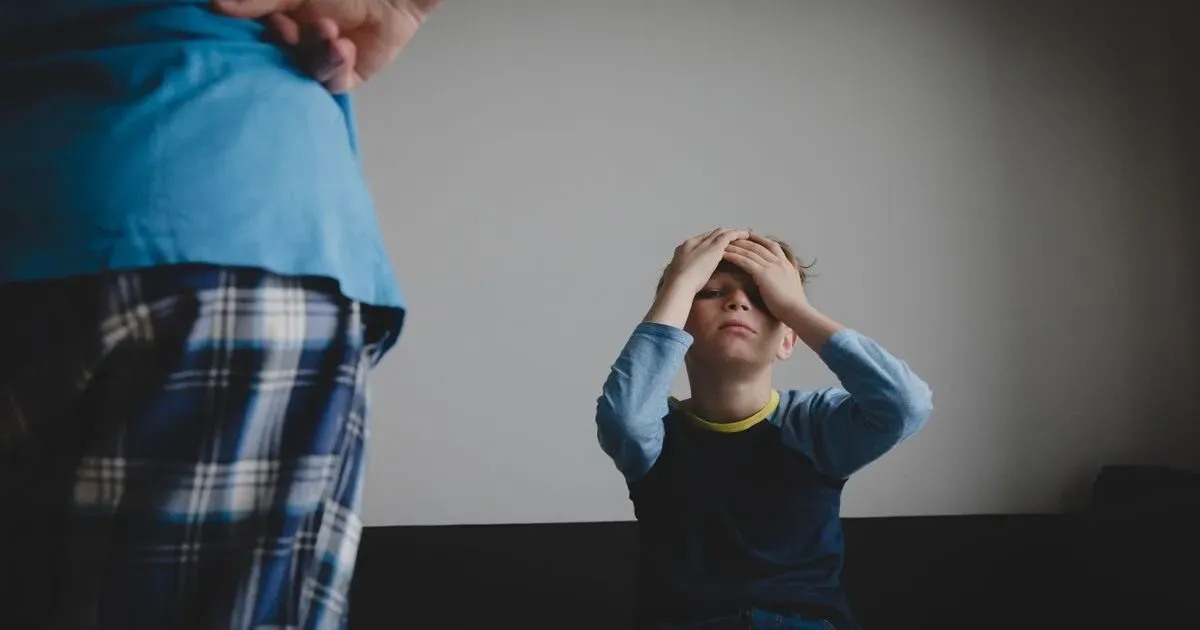
- Your feelings are handled as accusations. Saying you were hurt starts an argument about her intentions.
- She competes with you. Your good news gets topped, corrected, or redirected.
- She rewrites events. You remember it one way, she remembers a version where she was reasonable, and this is where gaslighting starts.
- Privacy is treated as betrayal. Doors, diaries, phones, and later your adult household.
- She is different in public. Warm and generous in front of others, cold the moment the audience leaves.
- She keeps an account. Everything she has done for you is itemised and produced when you fail to comply.
- She is always the injured party. Any conversation about your hurt becomes a conversation about hers.
- Your role was assigned. You were the good one or the difficult one, and it was decided early.
None of these on its own means much. Every parent does some of them. The pattern is the presence of most of them, sustained, with no repair afterwards.
What does the research actually show?
More than most articles on this topic admit, and less than the confident ones claim.
There is no body of research on “narcissistic mothers” as such. What exists is research on the specific behaviours, which is more useful anyway.
Psychological control is the closest measured construct. It covers guilt induction, love withdrawal, and invalidating a child’s perspective.
A 2025 meta-analysis pooled 48 samples and 27,150 young people across 18 countries. Higher parental psychological control was associated with higher internalizing symptoms, at r = .27.
That is a moderate effect, and it held outside the Western samples where most of this work is done. One detail matters for you specifically.
The association was stronger when the young person reported it than when the parent did. Parents and children do not describe this behaviour the same way, and the child’s account tracks the outcome more closely.
On the longer term, a 2021 review of 23 longitudinal cohort studies tracked childhood exposures into adult diagnoses.
Emotional abuse showed a significant association with adult affective and psychotic disorders. Those exposed to multiple forms of maltreatment had over three times the odds of an adult mental disorder.
These are cohort studies rather than experiments, so they show association rather than proof of cause. They are still a great deal stronger than the cross-sectional surveys this topic usually rests on.
What is it like to be the daughter of a narcissistic mother?
The most searched version of this question, and there is one study that addresses it directly.
A 2025 study of 416 female university students measured perceived maternal narcissism against emotional balance.
It found a significant negative correlation. Intolerance was the strongest predictor of emotional imbalance, followed by exploitativeness.
Read the limits before you read anything into it. It was one university in Saudi Arabia, self-reported, and measured at a single point in time.
There is also a finding the headline would hide. Overall, these students rated their mothers’ narcissism as low.
That is the honest shape of this evidence. It describes a real association in a general population, not a study of survivors, and it cannot tell you about your mother.
What survivors describe consistently is subtler than the research captures. You read rooms before you enter them. You apologise reflexively. You struggle to know what you actually want, which is what self-abandonment does over years.
What kind of children do narcissistic mothers raise?
Here is where the internet version and the evidence part company, and the evidence is more interesting.
The familiar account is the golden child and the scapegoat: one favoured, one blamed, one damaged. Half of that is right.
A study of 725 adult children in 309 families asked directly about perceived maternal favouritism and disfavouritism in midlife.
Depressive symptoms were higher in the children who saw themselves as the mother’s greatest disappointment. That part is expected.
Depressive symptoms were also higher in the children who reported the most closeness to their mothers, and in those reporting the most conflict. Being the favourite was not protective.
The authors read this as social comparison rather than fairness. Being singled out in either direction is the thing that costs, and the association was stronger in Black than in White families.
A 2024 meta-analysis of differential treatment adds the mechanism. Across 13 samples, differential hostility mattered more than differential warmth.
The overall effect was small but significant, which is worth stating plainly rather than inflating. Being treated worse than a sibling registers more than a sibling being treated better.
If you were the golden child, this is your permission slip. The research does not support the idea that you got off lightly.
Daughters are often made into their mother’s confidant. Parentification covers that role reversal.
Do narcissistic mothers love their children?
Asked constantly, and it is the wrong question to be stuck on.
She very likely experiences something she calls love, intensely. That feeling is real to her, and it is not evidence about how she treats you.
The useful question is different. Can she see you as a separate person whose experience does not have to match hers?
That is answerable from your own history, without diagnosing anyone. It is also the thing that determines whether contact goes anywhere.
Is “Medea syndrome” a real thing?
Increasingly used online for narcissistic mothers, and it does not mean what those articles say it means.
The term appears in clinical literature. A 2010 paper in Revue Médicale Suisse describes it as a harassment behaviour by a spouse suppressing the other parent’s access to their children.
That is a post-separation pattern, about using children as instruments of revenge against an ex-partner. It sits alongside parental alienation, and in its extreme form the literature is discussing filicide.
Online it has been quietly rebranded to mean an enmeshed mother who treats her child as an extension of herself. That is a real pattern, and it is not this term. Enmeshment covers that pattern and what the research on it shows.
The distinction is practical, not pedantic. Take “Medea syndrome” to a therapist or a family lawyer and you will be describing custody-related revenge, which may not be your situation at all.
If your mother did weaponise you against your other parent after a split, the term fits and the literature is relevant. If she was engulfing rather than vengeful, say engulfing.
The grief nobody prepares you for
This part gets left out, and it is the part that stalls people.
You are not grieving a mother who died. You are grieving one who is alive, reachable, and still not able to be what you needed.
That grief has no ritual attached. Nobody sends cards. There is no date in the calendar, and the loss renews itself every birthday and every holiday.
Hope is what keeps it open. Each time she is briefly warm, the grieving resets, and you start again from the belief that this time it might hold.
Letting go of the mother you needed is not the same as forgiving the one you have. You can do the first without ever doing the second.
How do you deal with a narcissistic mother?
Nothing here changes her. All of it changes how much of you the relationship consumes.
Stop presenting evidence. You will not win the argument about what happened, because agreeing would cost her more than the argument does.
Say less. Detail is raw material. The grey rock method is the version of this built for family contact you are not ending.
Make boundaries about your own actions. “I will leave if this continues” is enforceable. “You need to stop” is a request she can decline, and boundaries covers the difference.
Expect escalation first. Boundaries reliably get worse responses before they get better ones, and the escalation is not evidence you were wrong.
Plan the exit before you arrive. Your own transport, a time you leave, somewhere to go afterwards.
Do not recruit the family. It rarely works, and it hands her the story about you, which is how a smear campaign starts.
Get one person who believes you. Not a majority. One is enough to keep your own account of your childhood intact.
Is it okay to go no contact with your mother?
Yes, and you will not need this article’s permission when you decide.
Family estrangement covers what the research shows about estrangement from parents, including how common it is and how people cope.
It is worth naming what makes this different from leaving a partner. There is no socially sanctioned version of it, and people who accept that you left a cruel husband will ask when you are going to forgive your mother.
Most people try lower contact first, and that is reasonable. Fewer visits, shorter ones, no discussion of anything personal.
Low contact works when the harm is proportional to the exposure. Where the pattern reasserts itself in any amount of contact, no contact is the option that remains.
Go in expecting the cost. Estrangement carries real grief and real social pressure, and it is still frequently the least damaging choice available.
The regulation work matters more here than in most situations, because family contact is scheduled and anticipated. Nervous system regulation is the practical half of surviving a visit.
Common questions
How do I know if she is a narcissist or just difficult? You mostly cannot, and it does not change what to do. Ask whether repair ever happens after conflict, rather than trying to diagnose her.
Will she ever change? Change requires wanting to, and this pattern is built to avoid the self-examination that would start it. Plan for the mother you have.
Am I the narcissist? People who ask this question are the least likely to be. The pattern in question does not usually include worrying that you are the problem.
What if she is elderly or unwell? Care and contact are separable. You can arrange for someone to be looked after without being the person in the room.
Why does my sibling not see it? Because their childhood was arranged differently. Siblings in the same house are given different roles, and different roles produce different memories.
Do I have to forgive her? No. Forgiveness is one route through this and it is not required, and it is not a precondition for recovering.
What to take from this
The evidence supports the mechanism rather than the label. Psychological control, emotional abuse, and being singled out within a family all track poorly into adulthood.
What it does not support is a tidy diagnosis. Most mothers described this way do not have a personality disorder, and the harm is not conditional on one.
You are allowed to describe what happened without proving it in clinical language. The pattern is the evidence, and you lived in it.
Where to go next. The family scapegoat covers what happens when one child carries the blame, and narcissistic parents covers the wider picture. The narcissistic supply explains what your compliance was actually for, and the covert narcissist covers the quieter presentation many mothers fit better.
If you want structured support with the grief specifically, the 8 week narcissistic abuse recovery program is built for it. If there is any question of danger, start with crisis support.
Coaching is not therapy and is not a substitute for medical or psychiatric care. If you are in crisis, please use the support resources on this site or contact your local emergency services.