Narcissistic Mother-in-Law: How to Cope
The signs of a narcissistic mother-in-law, why your partner gets caught in the middle, and how the two of you can set boundaries that hold.

On this page
She is charming at the wedding, generous at birthdays and admired by her friends. Somehow, after every visit, you and your partner are arguing.
You cannot quite explain it to anyone. On paper, she has done nothing wrong.
If that is the shape of your family, this is for you. It covers the signs of a narcissistic mother-in-law, why your partner gets caught in the middle, and how to protect your marriage without starting a war.
What is a narcissistic mother-in-law?
A narcissistic mother-in-law is a partner’s mother whose need for control, admiration and first place in her child’s life keeps outweighing your marriage. She treats you as a rival, an audience or an outsider, and she reacts badly when her child puts the marriage first.
She may or may not meet the criteria for narcissistic personality disorder. Only a clinician who assesses her could say. You do not need a diagnosis to notice that every visit leaves your household worse off.
Most of this applies to a narcissistic father-in-law too, and to any gender of partner. The pattern is about control, not about mothers.
What are the signs of a narcissistic mother-in-law?
The general signs of a narcissist apply. With in-laws, they tend to gather around three things: your partner, your home and your children.
- You are always the outsider: Inside jokes, family photos and plans happen around you, never with you.
- Compliments carry a sting: “You look tired.” “That is an interesting choice.” Each one is deniable on its own.
- She goes around you: She calls your partner, not you. She makes plans with them and presents you with the result.
- Your boundaries are tested: Arriving unannounced, ignoring your parenting rules, or “forgetting” what you agreed.
- She plays the victim: If you push back, she is hurt, and you are the one who upset the family.
- She competes for your partner: Their time, their loyalty and their sense of who comes first.
- The grandchildren are used: Gifts, favouritism, undermining your rules, or threats to withhold contact become bargaining chips.
Plenty of mothers-in-law are clumsy, old-fashioned or slow to let go. That is not the same thing. The pattern to watch is persistent: undermining that continues for years and gets worse when it is named.
Why does my partner not see it?
Because your partner grew up inside it. What looks like control to you may feel like normal family life to them. Pushing back against their mother can feel like betraying the person who raised them.
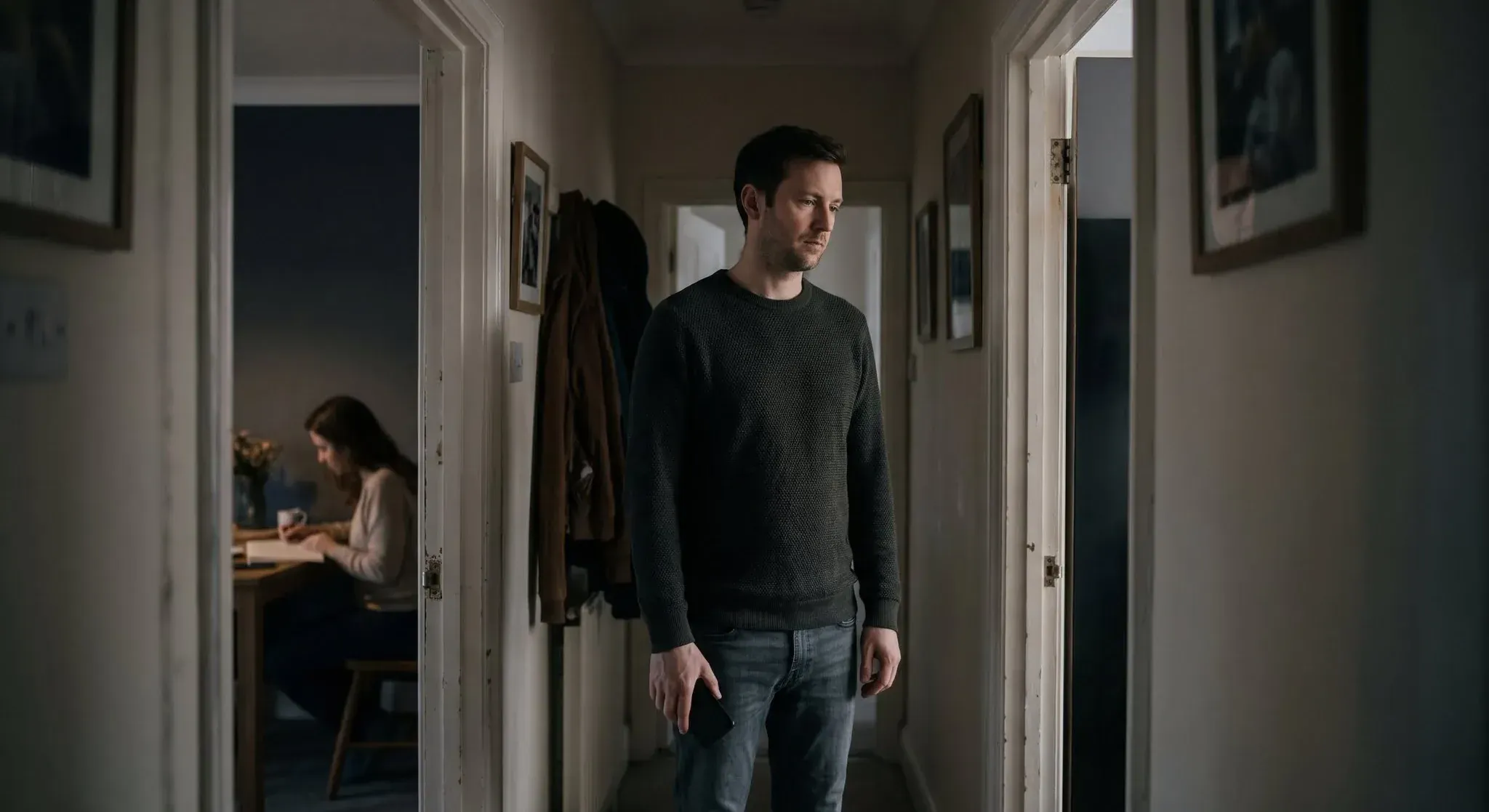
Many partners also learned as children that keeping their mother calm kept the house calm. As adults, they still reach for that habit. Asking them to change it can feel like asking them to step into a fire.
Closeness and control are different things. In a study of 264 married couples, researchers found that warmth and caregiving in families were separate from intrusiveness, the blurring of boundaries. A partner can love their mother and still learn to stop her intruding.
Enmeshment explains how families blur those lines, and why leaving the pattern feels so disloyal.
Why does the conflict always end up between us?
Because the relationship between you and your mother-in-law runs through your partner. When she feels shut out, the pressure lands on her child, and from there it lands on your marriage.
Research on mothers-in-law points to that triangle. In a study of 267 mothers-in-law, closeness to a daughter-in-law was linked to the mother’s closeness with her son and to how happy he was with the relationship. Feeling left out of the triangle was linked to less closeness.
That study surveyed ordinary mothers-in-law, not narcissistic ones. It shows how much the son or daughter in the middle shapes the in-law bond. With a narcissistic mother-in-law, that middle position becomes the pressure point.
The same pattern of one person pitting two others against each other has a name. Narcissistic triangulation explains how it works.
How do you deal with a narcissistic mother-in-law?
Start by treating it as a problem the two of you share, not a fight between you and her. Boundaries tend to hold better when they come from the couple, not from the in-law who married in.
- Agree on the rules first, in private: Visits, holidays, the children, money. Decide together before she is in the room.
- Her child delivers the message: Boundaries land differently when they come from her own son or daughter. It also stops you becoming the villain.
- Keep consequences small and certain: If she arrives unannounced, the visit is short. If she undermines your parenting, unsupervised time pauses. Follow through every time.
- Reduce the surface area: Shorter visits, neutral places, and a clear end time.
- Do not argue the details: She can always reinterpret a comment. Stick to the pattern and the rule.
- Protect your private life: Share less. What she does not know cannot be used.
Boundaries with a narcissist covers how to hold a limit when someone keeps testing it.
What if my partner will not set boundaries?
Then the problem is no longer only your mother-in-law. It is a gap in your marriage, and it needs addressing directly.

Name what you need without attacking their mother. “When she undermines me in front of the children and you stay silent, I feel alone in this family.” Then ask for one specific change, not a total transformation.
Give your partner time. Change against a lifelong pattern is often slow and uneven. Watch the direction, not the speed.
If your partner treats you the way their mother does, the problem may run deeper. Narcissistic husband covers that pattern inside a marriage.
Narcissistic wife covers it from the other side.
How do you protect the children?
Children notice how adults treat their parents, even when nobody says anything. Your job is to keep them safe and to stay their steady adult, not to win the argument.
- Supervise where needed: If she undermines you, criticises you to them, or plays favourites between grandchildren, keep visits supervised.
- Do not make them messengers: Children should never carry adult disputes in either direction.
- Name it simply if they ask: “Grandma sometimes says unkind things. They are not true, and you can always tell us.”
If her treatment of one grandchild mirrors what your partner went through, family scapegoat explains what that role does over time.
When is going no contact the right choice?
When contact keeps harming your marriage, your mental health or your children, and smaller limits have failed. It is a serious step, and it works best when you both agree to it.
Reduced contact can come first: holidays only, public places, or contact through your partner alone. No contact rule covers how to hold a full break if you reach that point.
If the situation involves threats, intimidation or fear for your safety, please treat it as a safety issue. Crisis support lists services you can contact now.
Common questions
Can a narcissistic mother-in-law change? Some soften with age or when the couple holds firm limits for long enough. You cannot make it happen, and your marriage should not wait on it.
Should I confront her directly? Rarely, and not alone. A direct confrontation from you tends to become a story about how you attacked her.
Why does she treat me worse than my partner’s siblings’ partners? Sometimes the newest family member becomes the target, or the one who seems most likely to take her child away. It is about her need for control, not about your worth.
Is it normal to dread every family holiday? It is common when every holiday follows the same script. Changing the plan, the length or the location is allowed.
What to take from this
A narcissistic mother-in-law rarely attacks openly. She works through the people you love, which is why the conflict so often lands between you and your partner.
The fix is rarely winning against her. It is the two of you agreeing on what your family will and will not accept, and holding it together.
Where to go next. Narcissistic mother explains what your partner may have grown up with.
Narcissistic parents covers how that upbringing shapes adult children.
If you want help protecting your marriage and deciding what contact you can live with, narcissistic abuse recovery coaching starts with a free fit call.
Coaching is not therapy and is not a substitute for medical or psychiatric care. If you are in crisis, please use the support resources on this site or contact your local emergency services.