Narcissistic Sibling: Signs and What to Do
The signs of a narcissistic sister or brother, how family roles keep the pattern going into adulthood, what research shows, and how to protect yourself.
On this page
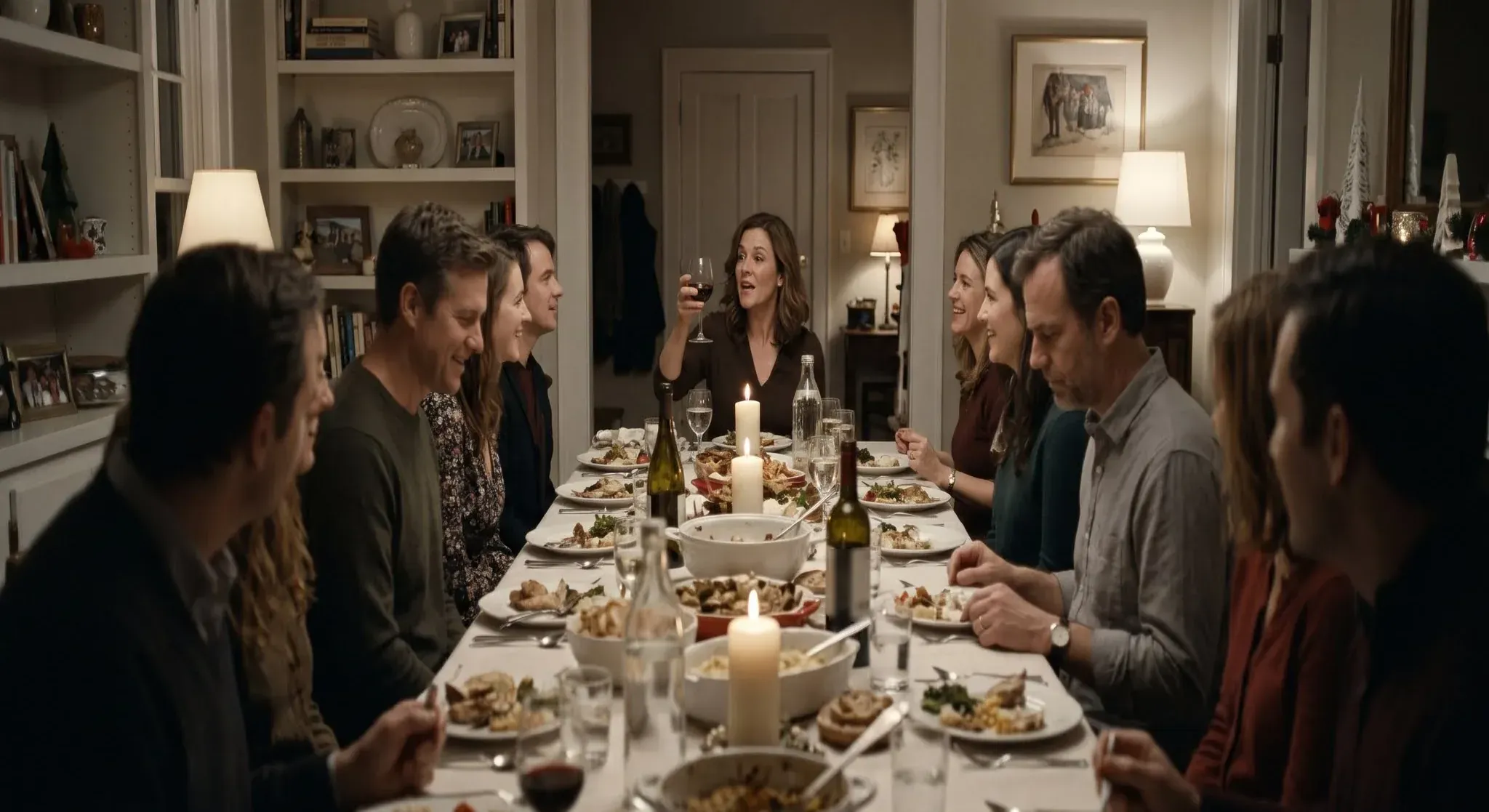
Every family gathering follows the same script. Your sister arrives late and becomes the centre of the room. Your brother corrects your memory of your own childhood. Everyone else acts as if nothing is happening.
You leave wondering why you, a grown adult, still feel twelve years old around them.
If that sounds like your family, this is for you. It covers the signs of a narcissistic sister or brother, how childhood roles keep the pattern alive, what the research says, and how to protect yourself without losing the rest of your family.
What is a narcissistic sibling?
A narcissistic sibling is a brother or sister whose need for admiration, control and being right keeps outweighing your feelings and your version of events. They compete where you wanted closeness, and they punish you for stepping out of the role the family gave you.
They may or may not meet the criteria for narcissistic personality disorder. Only a clinician who assesses them could say. You do not need that label to see a pattern that has hurt you since childhood.
Sibling relationships are often the longest of your life. That is what makes this one so hard. You did not choose them, and you cannot simply leave the family.
What are the signs of a narcissistic sister or brother?
The general signs of a narcissist apply. Between siblings, they tend to look like this.
- They rewrite family history: Your memories get corrected, mocked or erased. Their version becomes the official one.
- Your success is a provocation: Good news is met with silence, a put-down or a bigger announcement of their own.
- They run the parents: They know how to get what they want from Mum or Dad, and how to turn them against you.
- Rivalry never ended: At forty, they are still competing for the same things they fought you for at ten.
- You are the family problem: Whatever goes wrong, the story ends with you being difficult, sensitive or ungrateful.
- They use the family to reach you: Messages arrive through parents, cousins or in-laws. People who carry them are often called flying monkeys.
- There is no repair: After a fight, you are expected to act as if it never happened.
Every set of siblings fights. Teasing, rivalry and falling out are normal parts of growing up together. What counts is the pattern: one-sided harm that continues into adulthood and does not change when you name it.
How do family roles keep the pattern going?
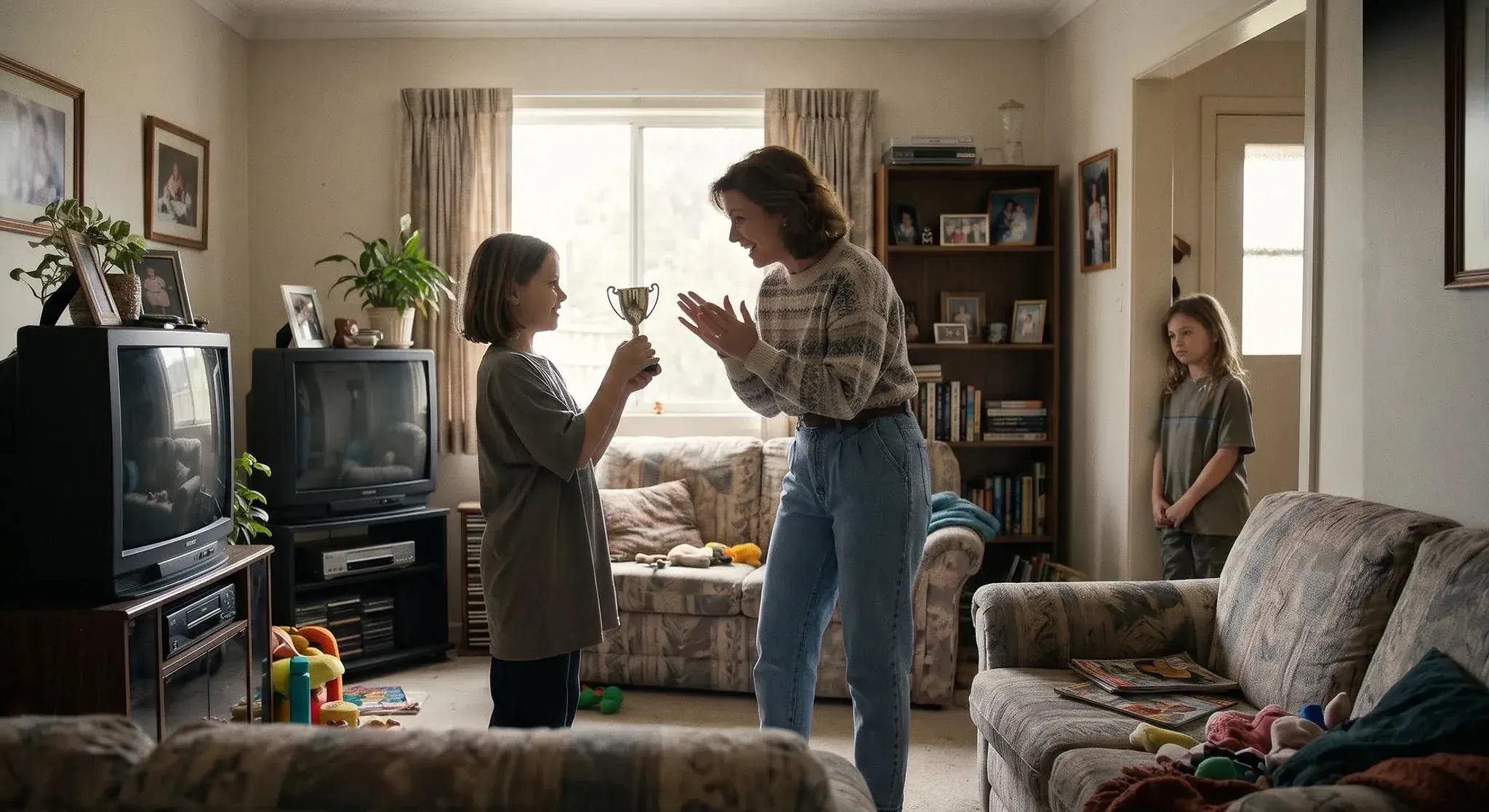
Many narcissistic siblings grew up in a family that sorted children into roles. One child became the golden child, praised and protected. Another became the scapegoat, blamed for the family’s problems. Others became invisible.
Family scapegoat covers what that role does to a child.
Narcissistic family system maps how all the roles fit together.
Research on favouritism supports what many adult siblings describe. A 2024 meta-analysis of 88 sources and 26,451 children found that being less favoured by a parent was linked to more anxiety, low mood and acting out. Larger differences in how parents treated siblings were linked to the same problems.
The effects do not end in childhood. In a study of 708 adult children in 274 families, siblings who believed their mother had a favourite were less close, whichever child was favoured. Recalled favouritism from childhood predicted tension between adult siblings more strongly than favouritism now.
These studies measure favouritism, not narcissism. What they show is that the sibling bond is shaped by how parents treated each child. Your sibling may be acting out a role the family wrote, which explains the behaviour without excusing it.
Is it sibling rivalry or sibling abuse?
Rivalry is two children competing as rough equals, and it usually eases with age. Sibling abuse is one-sided: one child holds more power, the harm is repeated, and the target cannot make it stop.
Sibling bullying is often waved away as normal. Research suggests it deserves more weight. In a UK study of more than 6,900 young people, those frequently bullied by a sibling at 12 had about twice the odds of depression and self-harm at 18.
A follow-up of up to 3,881 people from the same group found that sibling victims had higher odds of suicidal thoughts and self-harm at 24. Children bullied both at home and at school had the highest odds of all.
Those are links, not proof that sibling bullying caused every outcome. They do show that what happened between you and your sibling was not “just kids being kids” if it left marks that lasted.
If any of this brings up thoughts of harming yourself, please reach out today. Crisis support lists services you can contact now.
Why does it flare up when parents get older?
Because ageing parents bring back every old question. Who does the caring, who makes decisions, who gets the house, and who was loved more.
In a study of 450 adult children whose mothers needed care, giving care and believing the mother had a favourite were both linked to more sibling tension. The tension was greater when both were present.
A narcissistic sibling may take control of decisions, disappear when the work begins, or present themselves as the devoted child while you do the caring. Wills and inheritance can become the final contest.
If this is where you are, keep records, put agreements in writing, and get independent legal advice early. Do not rely on verbal promises made at the hospital bedside.
How do you deal with a narcissistic sister or brother?
Start by letting go of the hope that they will one day see what they did. Then decide how much contact you can manage without losing yourself.
- Stop defending your version: You do not need them to agree with your memories. You need to trust them.
- Keep conversations short and factual: Logistics, dates and plans. Leave feelings for people who handle them with care.
- Do not use parents as messengers: Speak directly or not at all. It keeps you out of the triangle.
- Plan family events: Arrive with an exit time, stay near people who feel safe, and leave when the script starts.
- Hold one boundary at a time: Small and keepable. Boundaries with a narcissist covers what to do when they push.
- Talk to the siblings who see it: If another brother or sister sees the pattern too, that shared reality is worth protecting.
When they try to provoke you, grey rock method covers how to give them nothing to work with.
Is it okay to go no contact with a sibling?
Yes. Ending or reducing contact with a family member is a legitimate choice when contact keeps causing harm. It is not a failure of love.

It often comes with a cost. Parents may pressure you, family events may change, and some relatives may take sides. Weigh that cost honestly against what staying in contact costs you now.
Family estrangement covers what the research says about estrangement and what life after it can look like.
No contact rule covers how to hold the decision once you make it.
Common questions
Can a narcissistic sibling change? Some people soften with age or with work they choose to do. You cannot produce that change, and building your plans around it tends to keep you stuck.
Why do my parents take their side? Often because the family roles were set long ago. Taking your side would mean questioning the whole family story, which many parents avoid.
Is my sibling a narcissist or am I the problem? Asking the question is a good sign. Am I the narcissist? walks through it honestly.
What if my narcissistic sibling has children I love? You can keep a relationship with nieces and nephews where the parent allows it. Keep the contact focused on the children and away from the old fight.
What to take from this
A narcissistic sibling is often playing a part the family wrote long before either of you could choose. That explains the pattern. It does not oblige you to keep playing your part.
You do not need your sibling, or your parents, to agree before you protect yourself. You need to believe your own account of what happened.
Where to go next. Narcissistic parents covers the parenting that often sits behind sibling roles.
Enmeshment explains families where closeness and control blur together.
If you want help working out what kind of relationship you can live with, narcissistic abuse recovery coaching starts with a free fit call.
Coaching is not therapy and is not a substitute for medical or psychiatric care. If you are in crisis, please use the support resources on this site or contact your local emergency services.